


Prague and Ústí nad Labem - Andrew - 2000

***
The Czech Republic (sometimes now called Czechia) was born after the split of Czechoslovakia - the so-called "Velvet Revolution", characterised by it's total lack of animosity and violence.
The Czech Republic was been amongst the quickest East European countries to recover from Communist domination, and it's capital city Prague has become one of the most popular destinations, with good reason as it is amongst Europe's most spectacular cities.
Andrew's father was born in Czechoslovakia in the town Ústí nad Labem, near the German border, so the country holds a special place in Andrew's life.
***
Prague and Ústí nad Labem - Andrew - 2000
I was originally only going to be in Prague briefly, on my way to Poland to meet up with Margaret Ziemianin. Then, at the last minute, she was called away to Frankfurt and so my holiday changed its character. I decided to spend more time in and around Prague, visit Ústí nad Labem where my father was born, and then travel on into Slovakia.
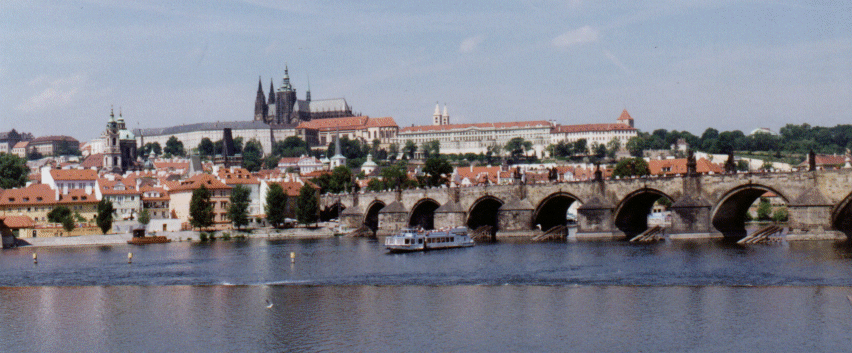
Prague Castle and the
Charles Bridge from the Vltava Bank
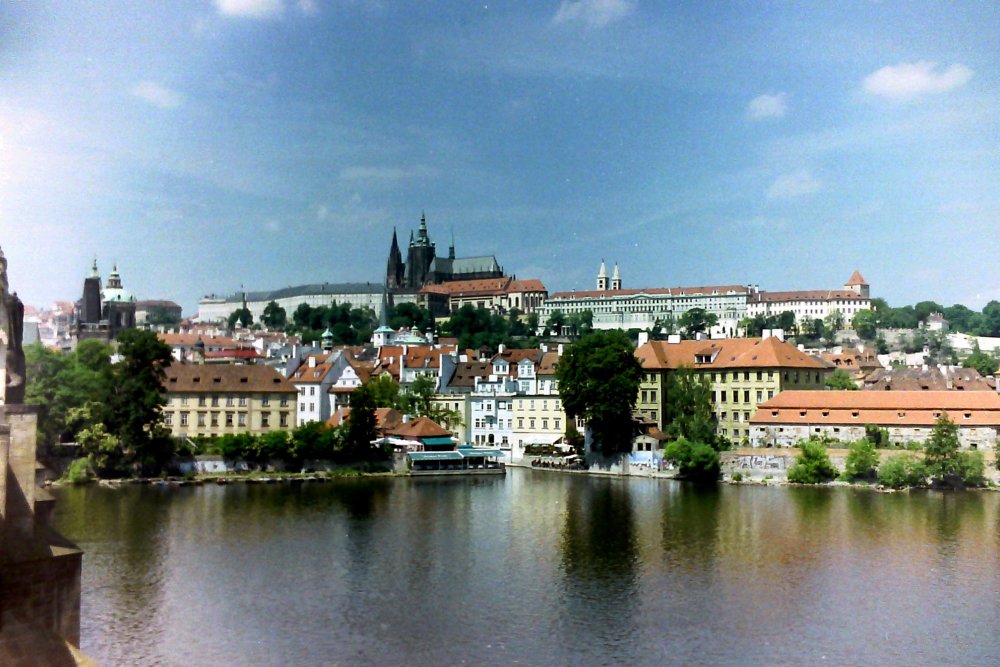
Another view of Prague
Castle from the Vltava
So it was I found myself staying at a pension some 2km from the City Centre (which after a few days felt like 10 and I began to think of as being halfway to Berlin). My first memorable view of the City came early on as I crossed the Vltava river on the Most Legií. I looked downriver to the Castle and the Charles Bridge - a view I would soon become very familiar with indeed.

The Charles Bridge from
the Stare Mesto Tower, Prague
Naturally, the Charles Bridge was the first place I made for. Before crossing I decided to climb the Staré Mĕsto Bridge Tower, which provided me with a superb view along the Charles Bridge (Most Karlủv) towards Prague Castle which dominates the City from almost every angle.
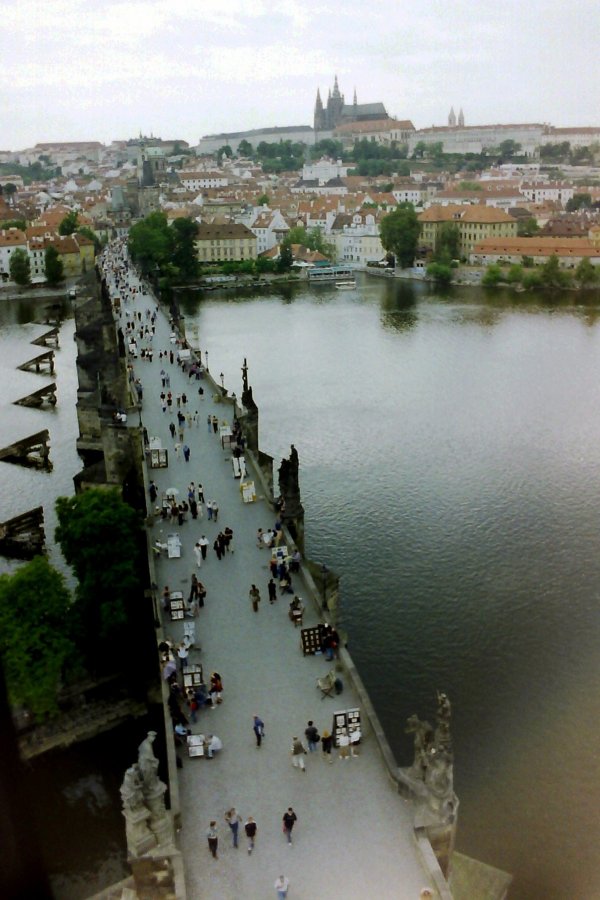
Another view looking
down on the Charles Bridge, Prague
Then for the first of very many times I wandered slowly over the Charles Bridge, gazing in awe at the glorious architecture surrounding me and soaking in the atmosphere, at various times on the Bridge there were jazz bands, opera singers, bagpipe players, zither players and a man playing a most peculiar instrument the likes of which I had not seen before. Not to mention all the people selling crafts and souvenirs and the long queue of people waiting to touch the plaque at the foot of the statute of St. John Nepomuk - thought to bring good luck and so often touched it is shiny brass where all else is tarnished and blackened. The Charles Bridge was great and everytime I passed over it I saw something else to photograph.
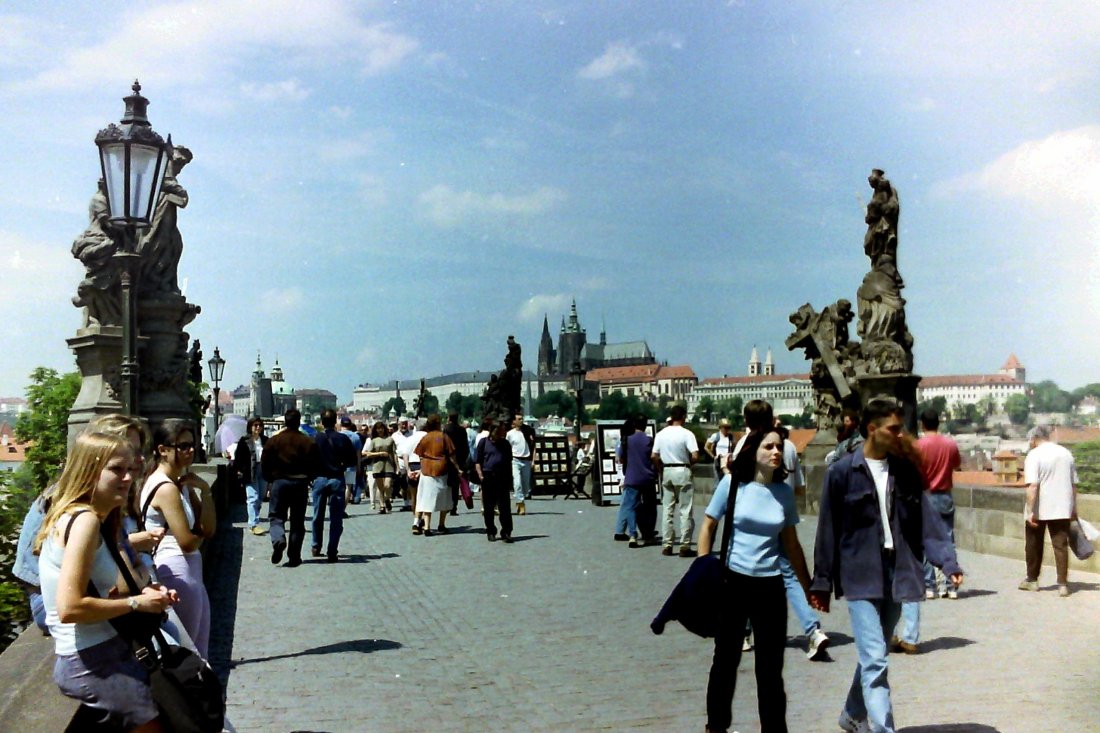
On the Charles Bridge,
Prague
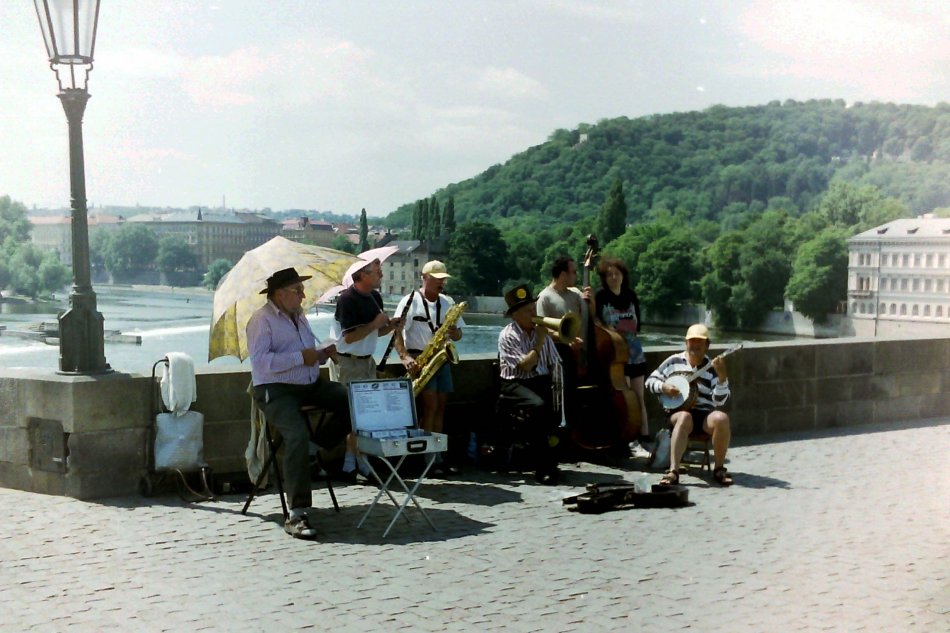
Musicians on the Charles
Bridge, Prague
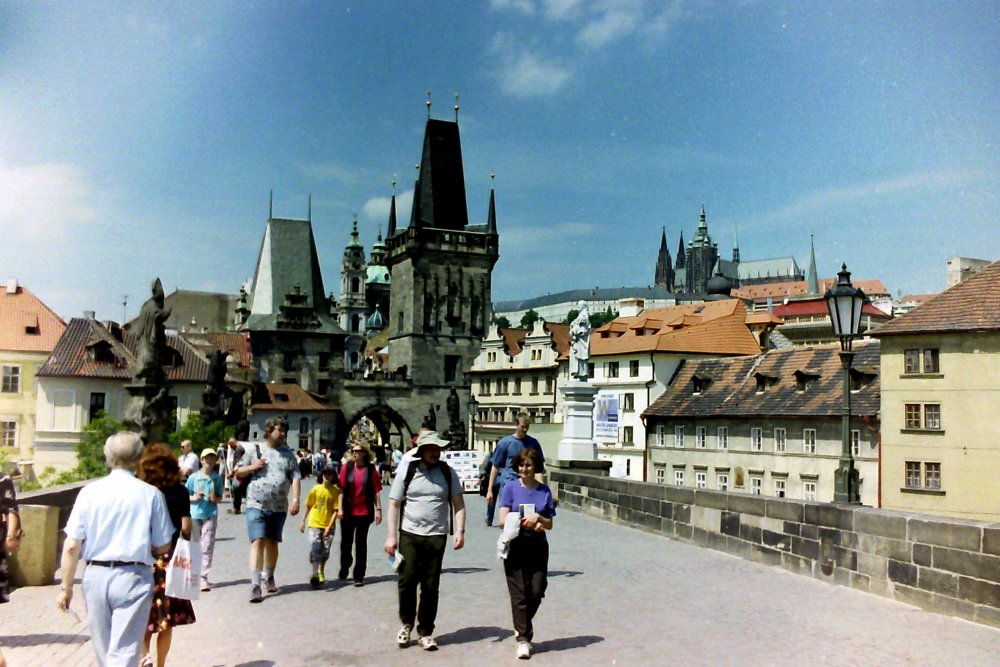
Charles Bridge and Malá
Strana Tower, Prague
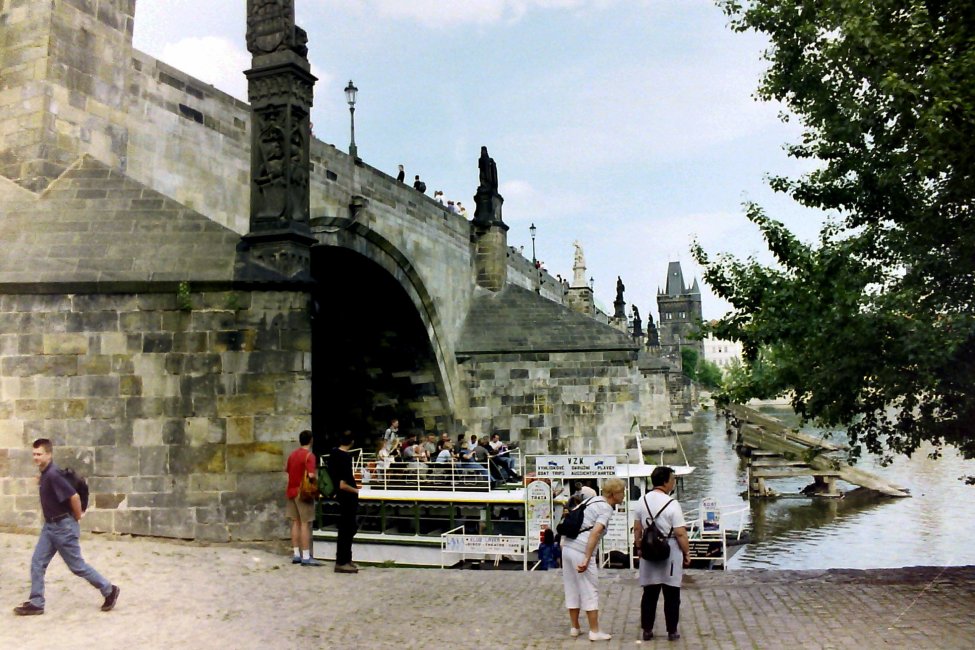
By the Side of the Charles Bridge, Prague
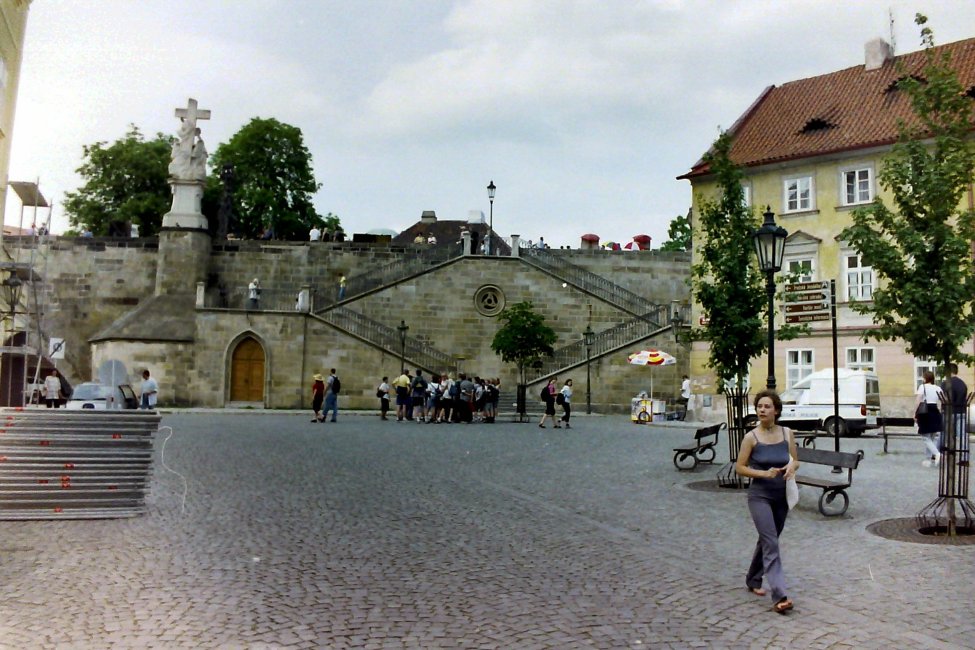
Steps up to the Charles Bridge, Prague
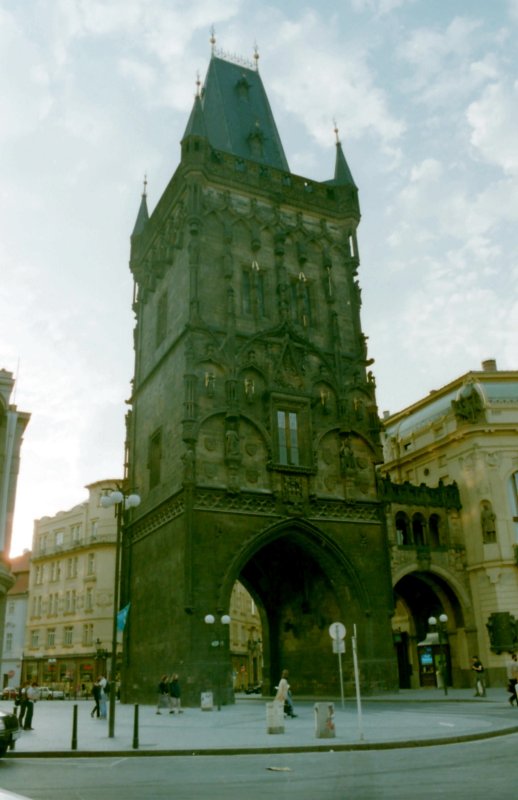
The Powder Tower, Prague
I was saving the Castle itself for another day, so having cross the Charles Bridge I turned around and went back the other way into the Staré Město (Old Town).
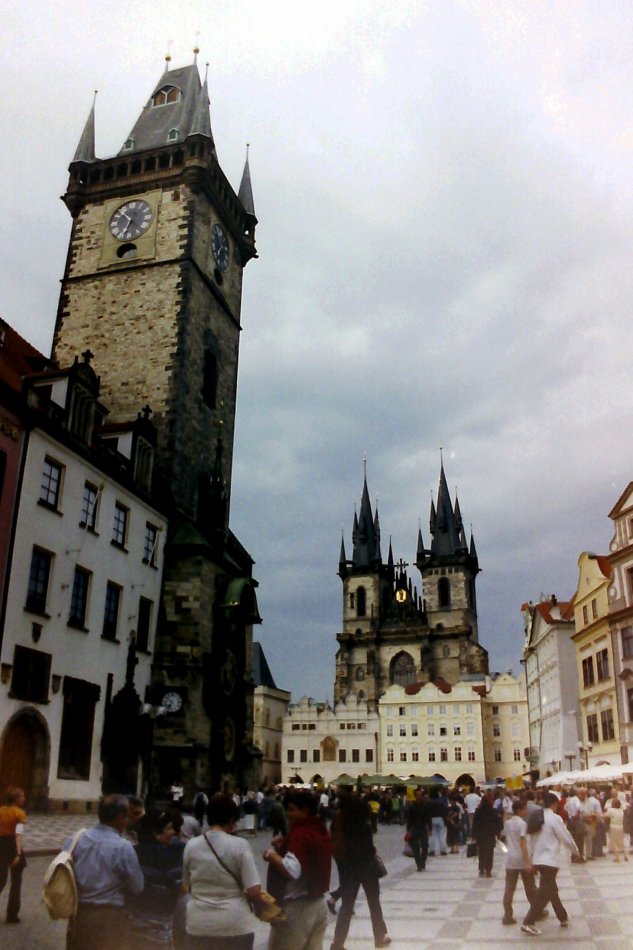
Old Town Hall Tower and Týn Church, Prague
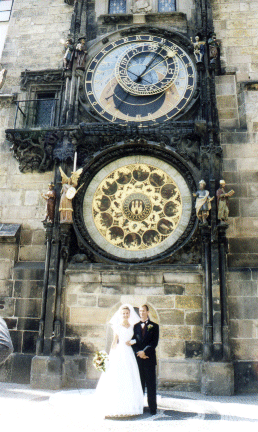
A Bride and Groom Pose
under the Astonomical Clock in Prague
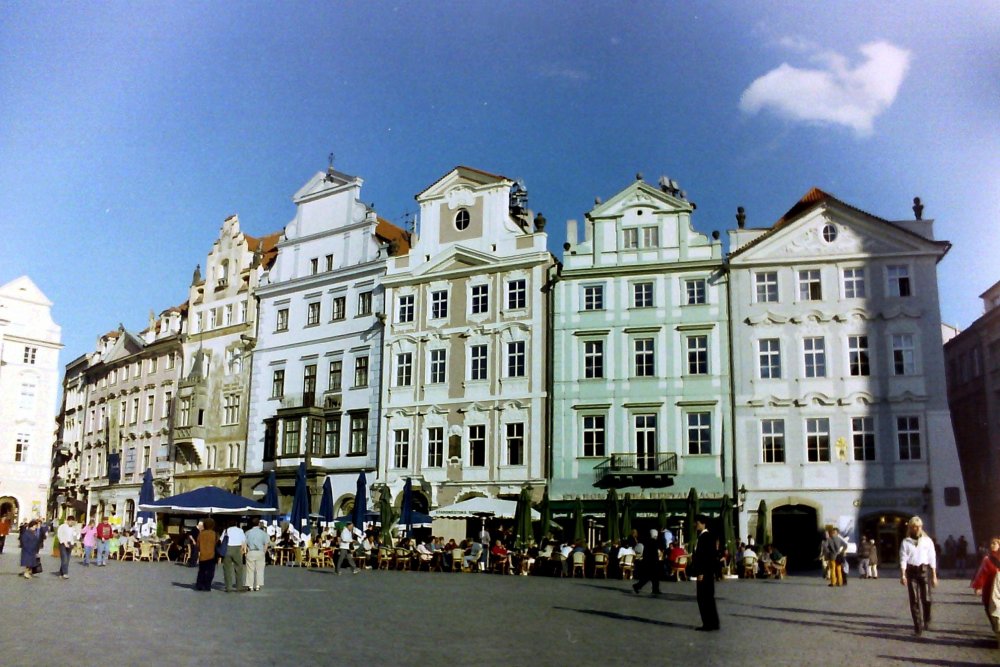
Old Town Square, Prague
I arrived at the Staroměstské Náměsti (Old Town Square) at a very opportune moment, just as the Astronomical Clock on the side of the Old Town Hall struck seven o'clock and the 12 apostles tropped along the Clock's Gallery. The Clock is favoured backdrop for many a Prague wedding photo (see above). The Old Town Square is a beautifully preserved area of mostly Baroque buildings, dominated by the Old Town Hall Tower and the Týn Church, the symbol of Prague and a magnificent confection of spires, turrets and towers that is breathtaking in the afternoon when the sun catches on the golden Madonna statue set in between the two towers.
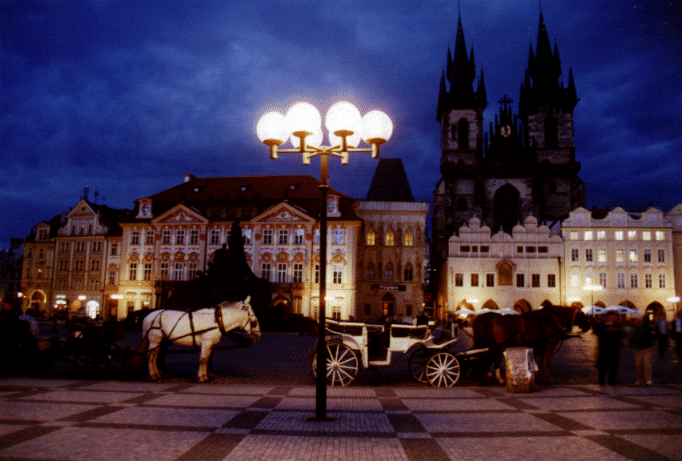
The Týn Church from the
Old Town Square, Prague
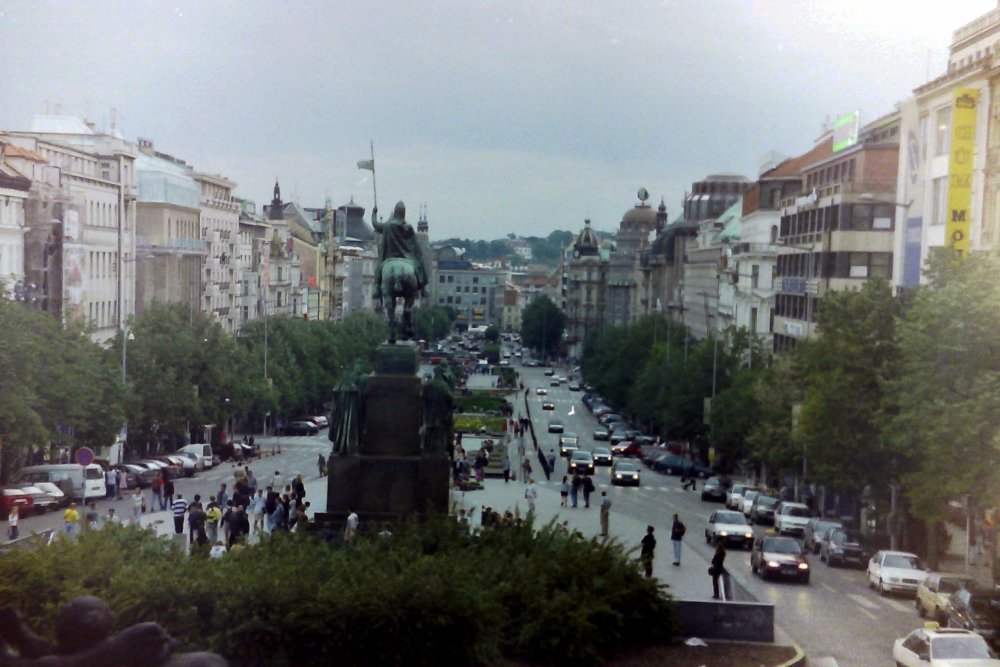
Wenceslas Sqaure, Prague

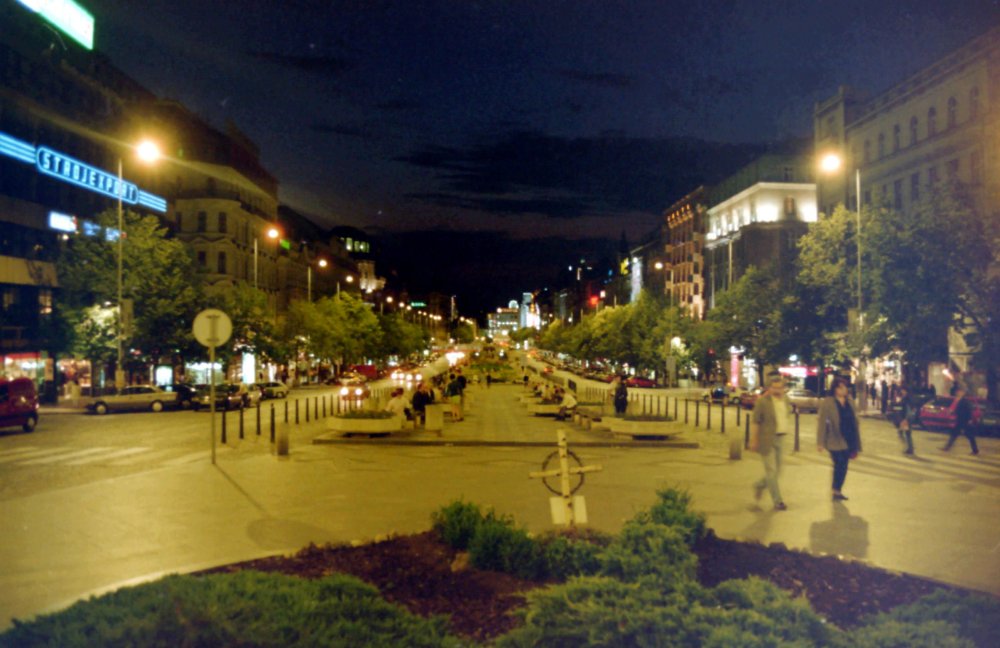
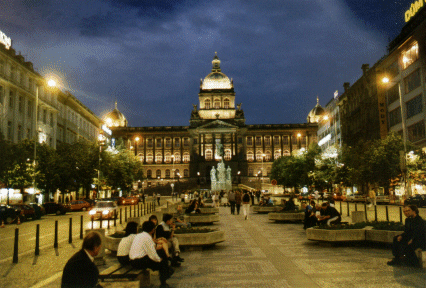
St. Wenceslas and the
Museum floodlit, Prague
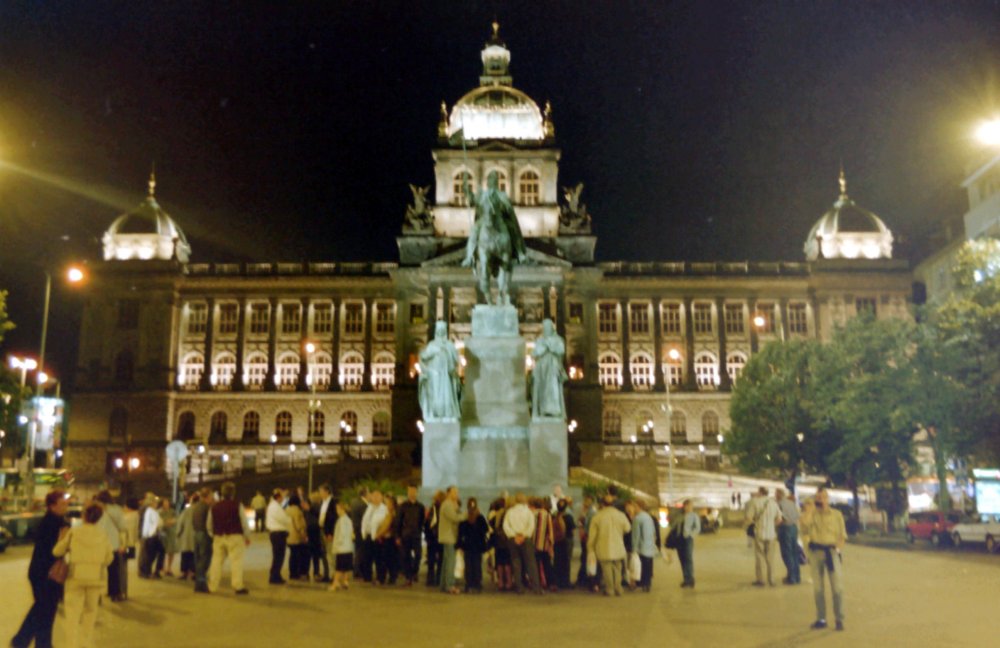
St. Wenceslas in the Square which bears his Name, Prague

The Charles Bridge at Night, Prague
Breakfast was the usual Germanic mix of muesli and cold cuts plus thick sludgy coffee. Thus fed my first stop today was to be Petřin Hill. This is a large hillside park next to the Castle district. The chief attractions are the funicular and two leftovers from the Prague Jubilee Exhibition of 1891. One is a replice of the Eiffel Tower 60 metres tall, the other is a Hall of Mirrors.
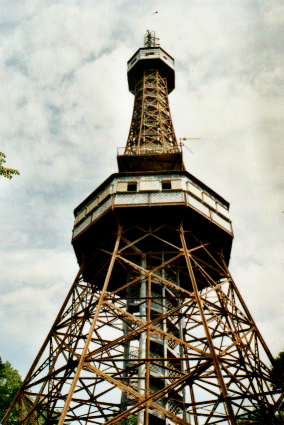
The Eiffel Tower on
Petrin Hill, Prague
A tip when using the funicular - don't get off at the station half way up thinking you've reached the top - it's a LONG walk up the rest of the way, believe me. Because that's exactly what I did. No wonder the school kids on the carriage gave me a funny look. Still the walk did allow me to see my first ever wild red squirrel, so it had its compensations.
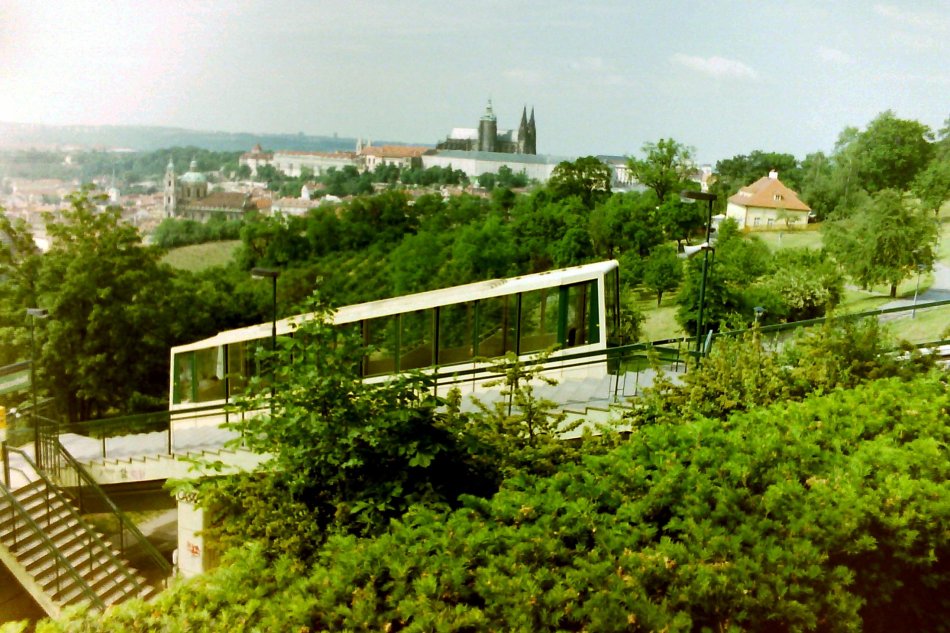
The Petrin Hill Funicular, Prague
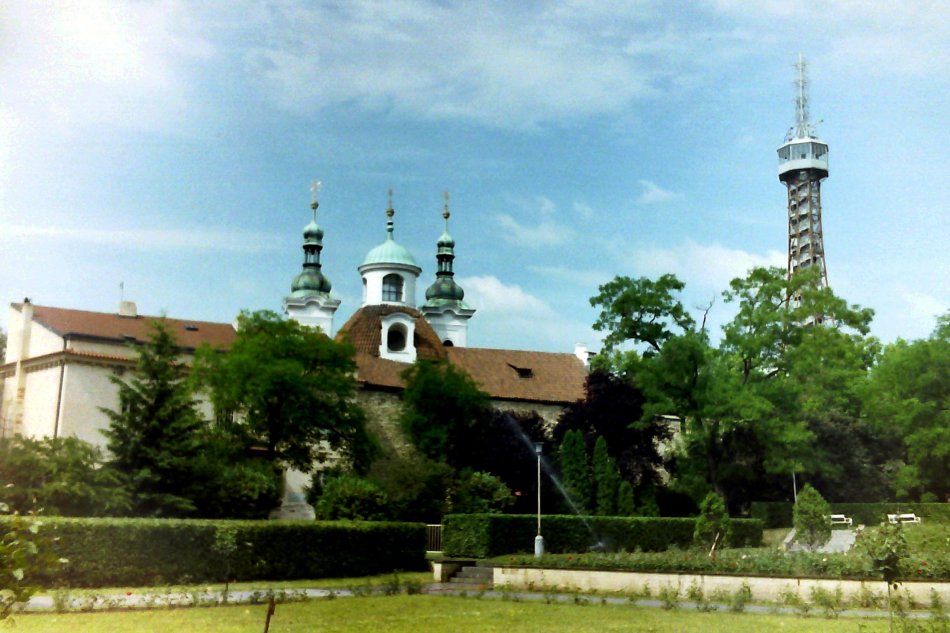
Petrin Hill, Prague
The Eiffel Tower replica is known as the Rozhledna (Observation Tower) and the climb to the top is a little bit scary for those with little head for heights (including myself!). The view from the top down across the Castle to the River is certainly worth the climb though. Having been a little nervous going up the Tower I was very nervous coming back down again - because on the way down you are looking out at the drop all the time. I was very happy to reach the ground. I waited for the school children to clear out of the Hall of Mirrors (Zrcadlová bludiste) before heading into it myself. I was mildly surprised to find that it wasn't just a lot of warped sea-side style mirrors, but actually a maze of mirrors with some brilliant optical illusions - like looking straight forwards into a mirror and not being able to see yourself!

Andrew in the Hall of
Mirrors, Petrin Hill, Prague
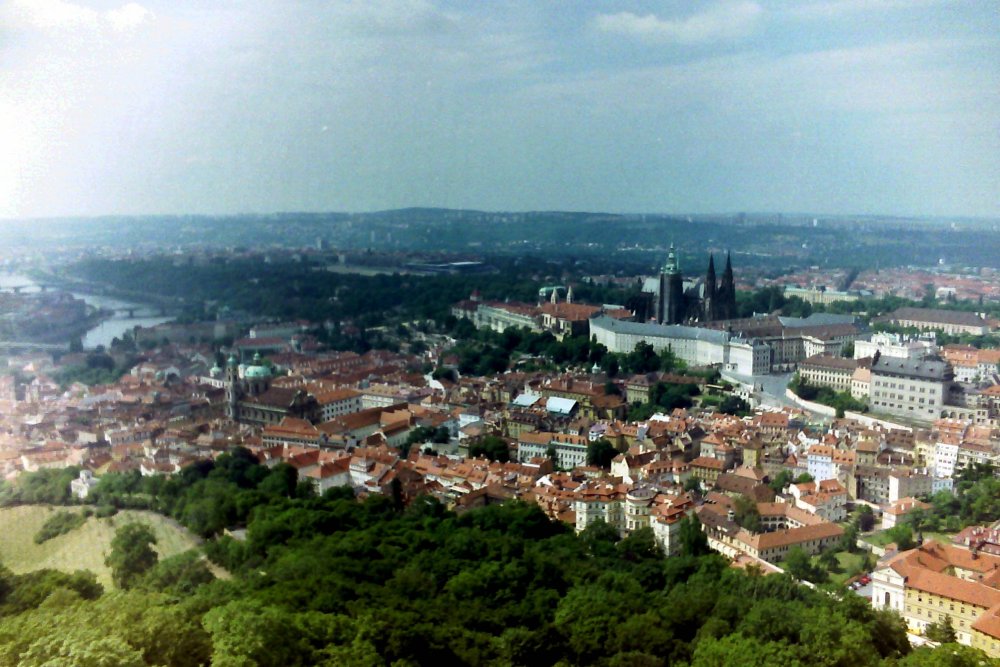
View from the Observation Tower, Petrin Hill, Prague
It was time to visit Prague Castle. On my way up towards the Castle I stopped in a beautiful little café where I had a 'medvedek' or Honey Bear - a concoction of warm milk, rum, honey and cinnamon which was very nice. On the ceiling of the café was a version of Michaelangelo's Sistine Chapel ceiling but instead of God pointing at Adam he is handing him a cup of coffee!
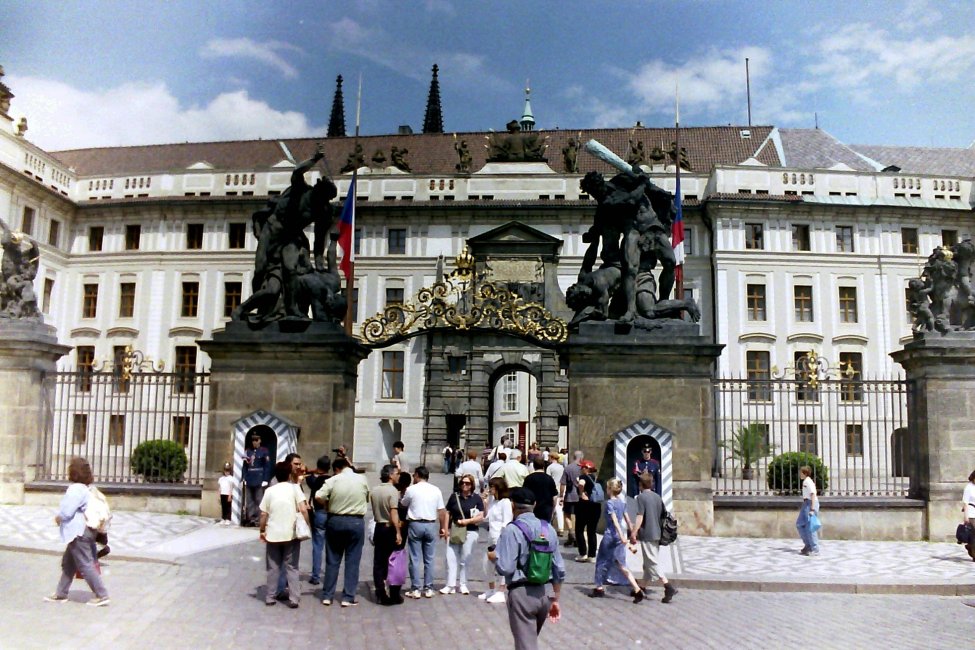
The Gates of Prague Castle
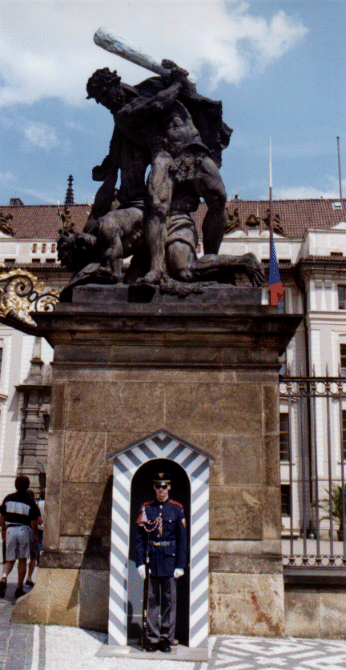
A Guard on the Gates of
Prague Castle
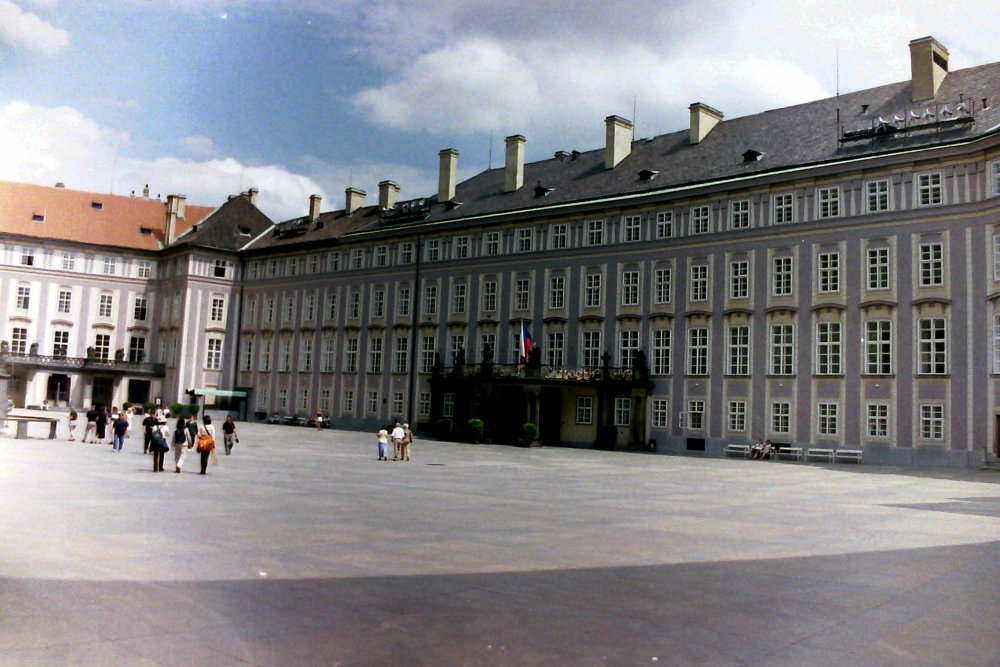
Palace inside Prague Castle
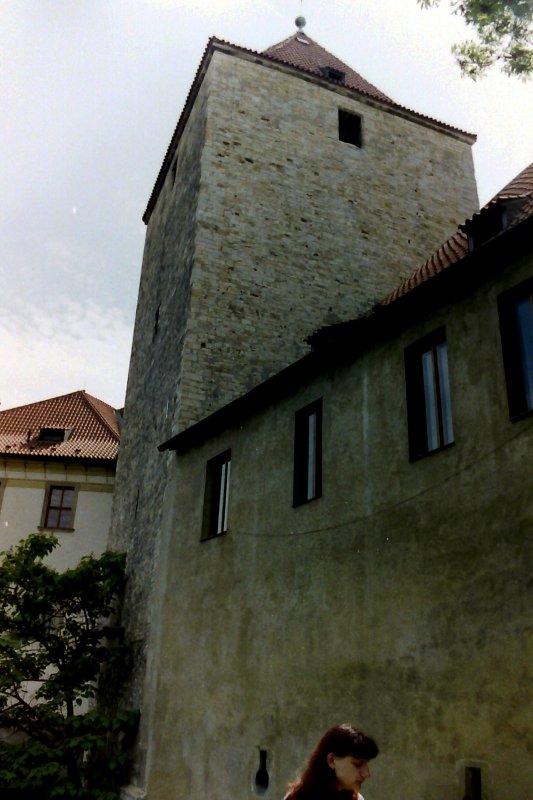
The Black Tower, Prague Castle
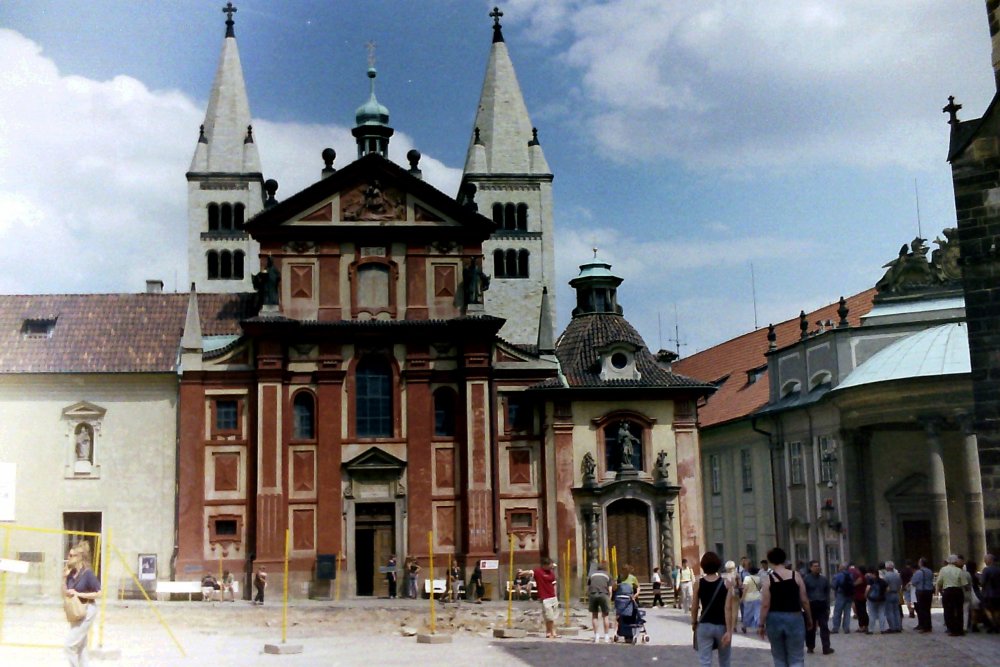
St. George's Basilica, Prague Castle

St. Vitus' Cathedral, Prague Castle
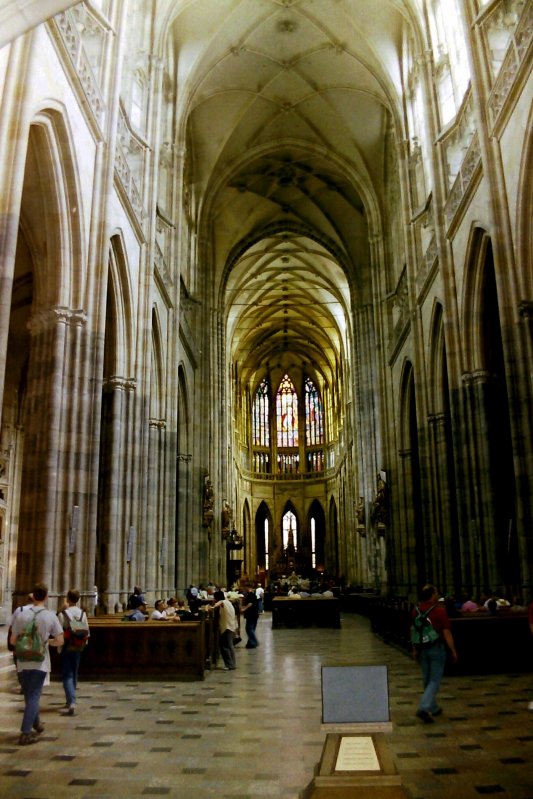
Interior of St. Vitus' Cathedral, Prague
There isn't a vast amount of actual Castle left, most of the Castle is taken up with the massive Palaces of the Hapsburgs and all is dominated by the soaring bulk of St. Vitus Cathedral which erupts from the centre of the Castle like some giant rocket ship and is visible from virtually everywhere in Prague. By far my favourite part of the Caste complex was Golden Lane, a row of ancient, tiny houses which clings to the inside of the one of the Castle's walls. At the end of Golden Lane is the Black Tower, one of the most Castle-like parts of the complex.
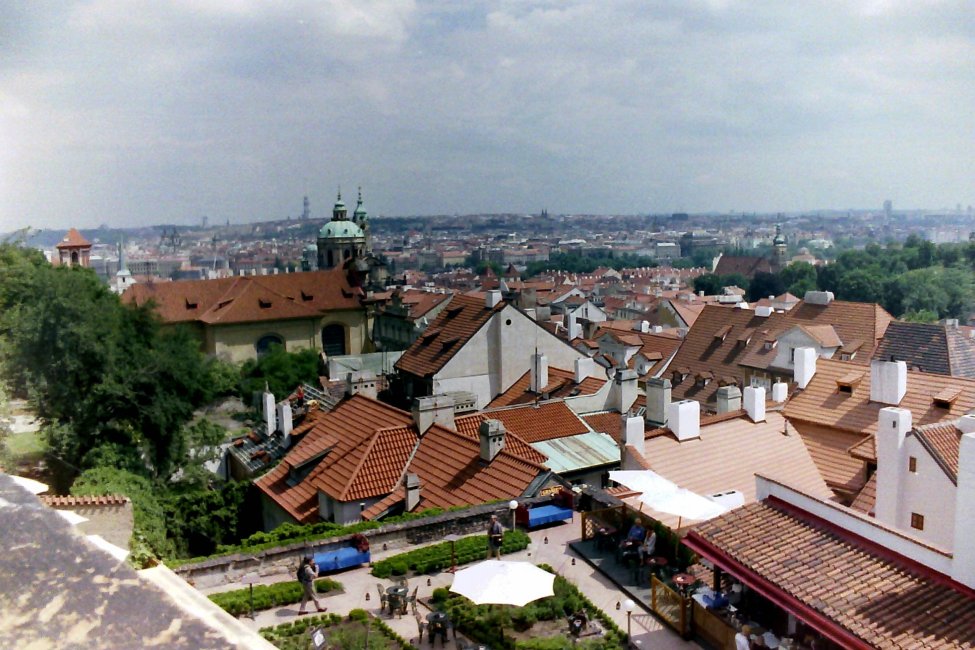
View from Prague Castle
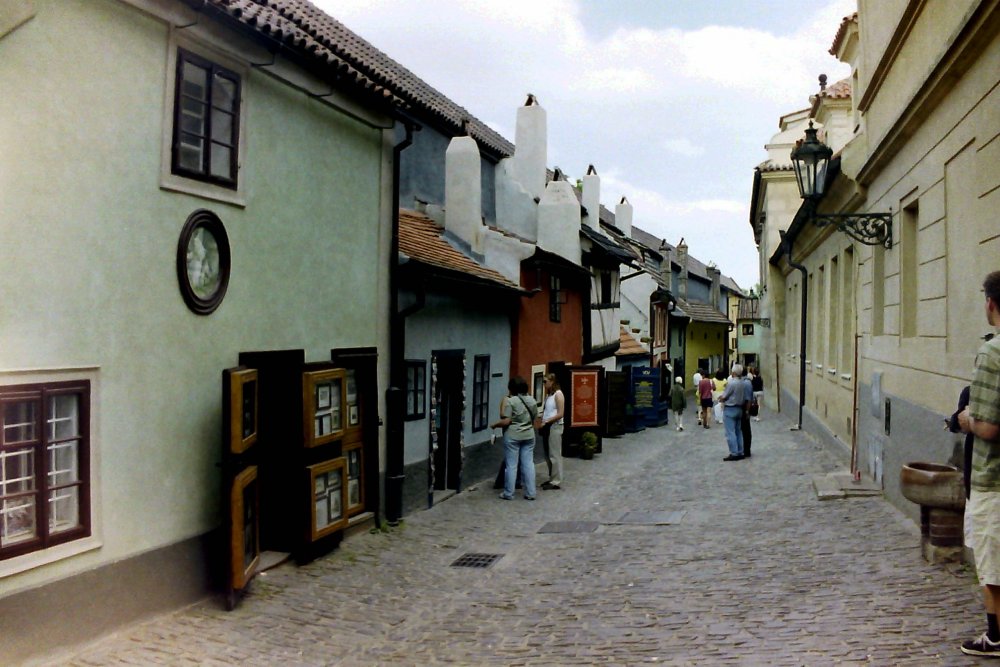
Golden Lane, Prague Castle
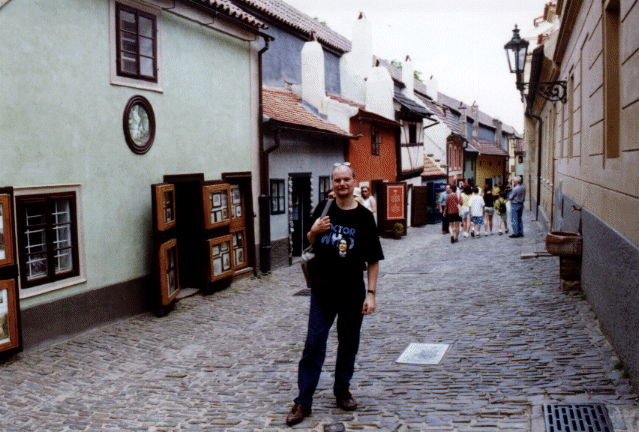
Andrew at the top of
Golden Lane, Prague Castle
To see more details about Prague Castle, visit our Castles of Europe pages.
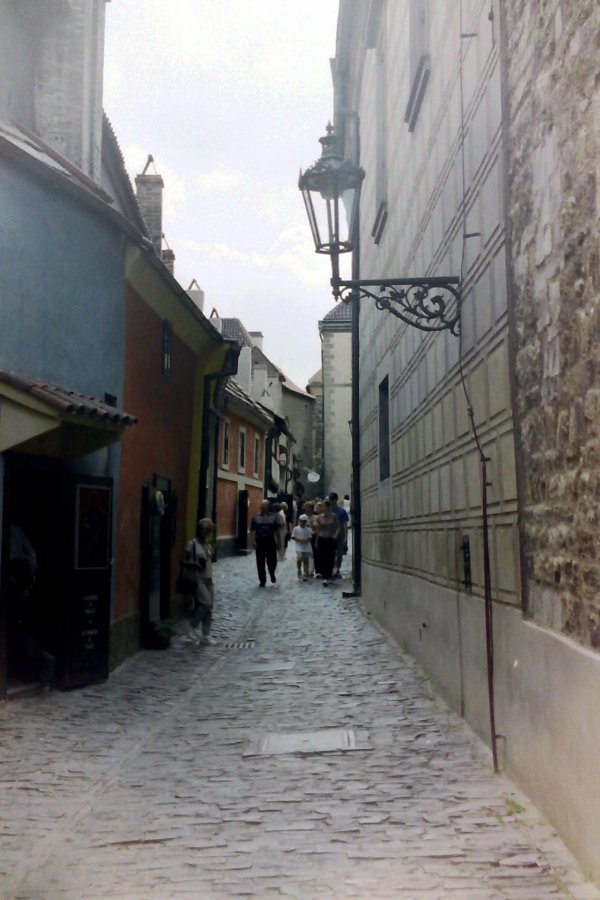
The Bottom of Golden Lane, Prague Castle

The John Lennon Wall in
the Malá Strana, Prague
Once finished at the Castle I wandered back down through the beautiful maze of little streets of the Malá Strana, passing the so-called John Lennon Wall with its image of the deceased Beatle and graffiti messages of peace and hope. Inevitably I arrived at the Charles Bridge, but this time I was going to go under it on a Vltava Boat Trip. The trip was enjoyable, although once you leave the centre of Prague there is less for the guide to tell you about and when the far end of the trip was reached the speakers were switched off and didn't come on again until they informed you the trip was over back at the quay by the Charles Bridge.
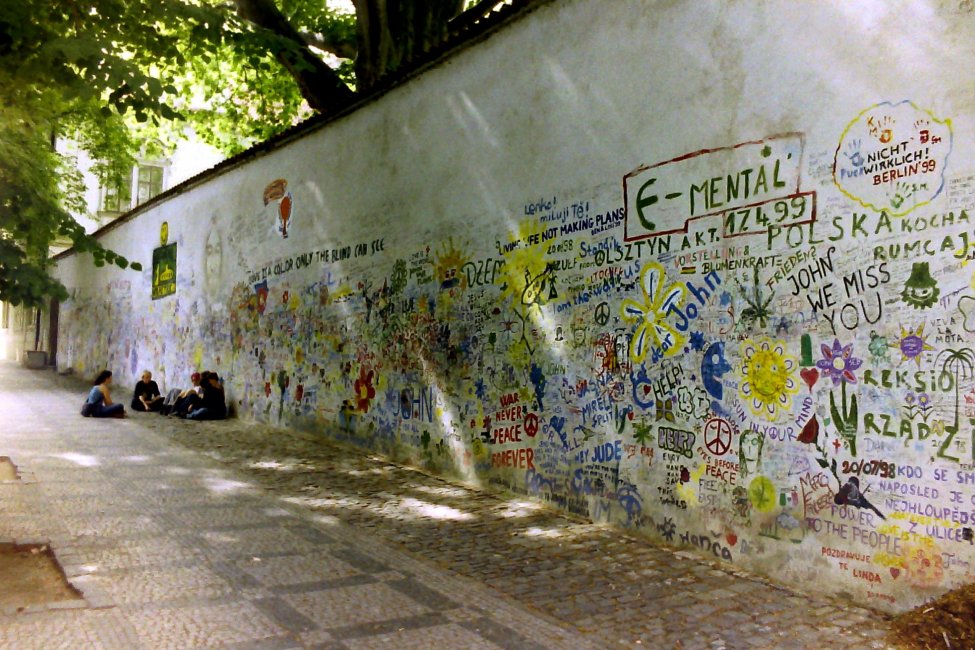
The John Lennon Wall, Prague
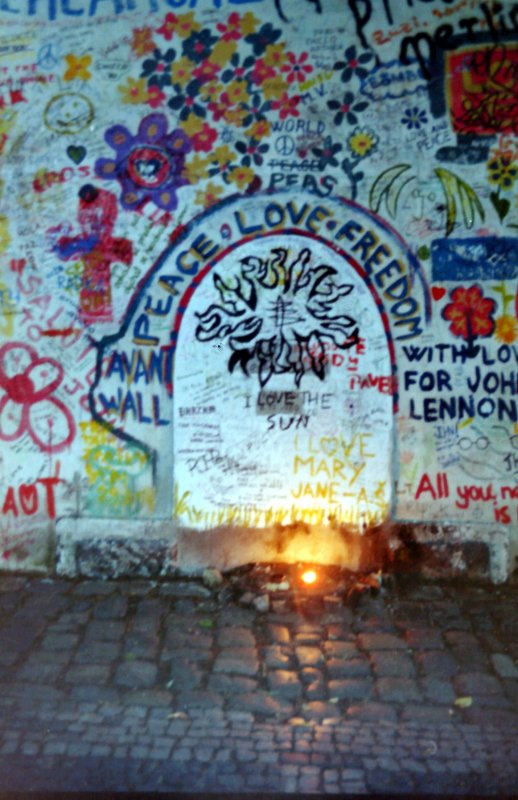
Candles at the John Lennon Wall, Prague
To add to my anxiety my camera's battery decided to die on me during the boat trip and I was suddenly faced with the possibility of not finding a lithium cell in Prague. Fortunately, this proved not to be the case and I got the battery easily. Ironically I didn't take many more pictures that day. I booked myself in to see a Black Light Show - one of those famous Czech shows where the performers are (generally) dressed head to foot in black and so things seem to move of their own volition. The one I chose was based (very loosely) around the music of The Beatles (who are idolised in Prague, particularly Lennon). It was a brilliant show, so cleverly done and a couple of the sequences (Lucy in the Sky with Diamonds and the Lennon tribute bit) were very memorable indeed...plus it only cost about Ł6!
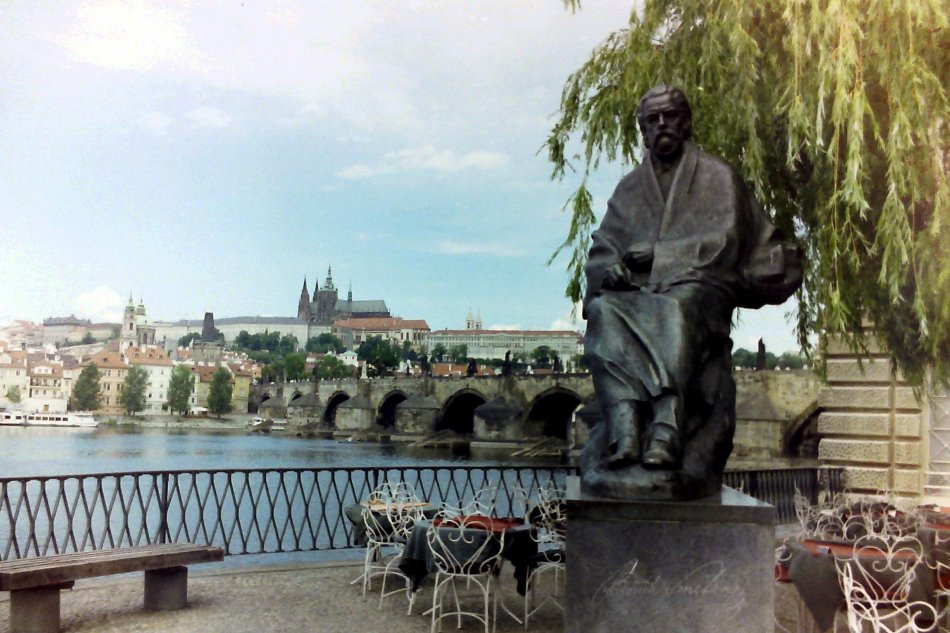
Smetana by the Vltava, Prague
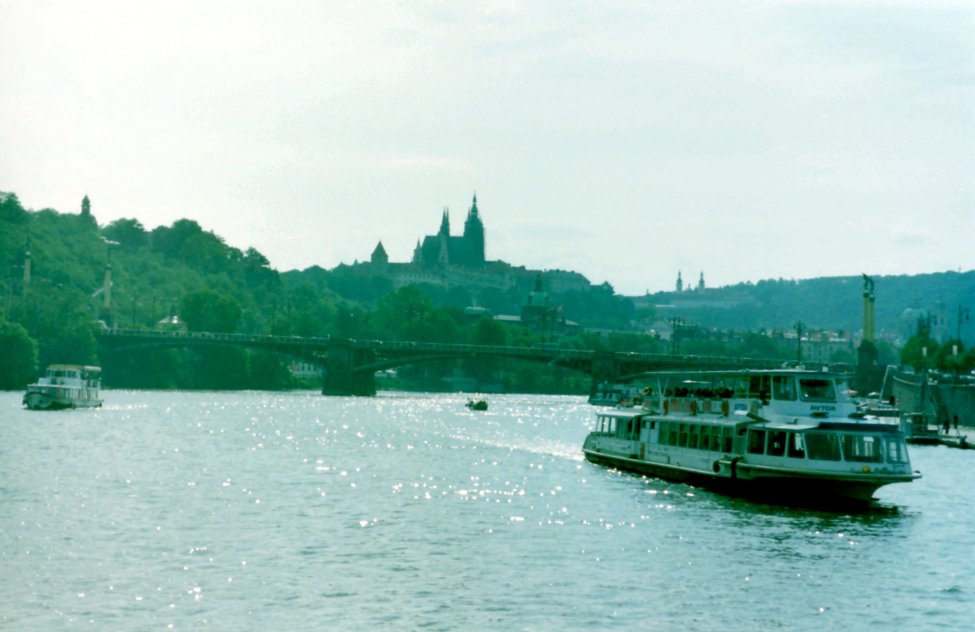
Vltava Boat Trip, Prague
I decided to try a different method of getting back to my digs in Berlin's eastern suburbs by getting off the Metro at Anděl station and walking back from there. This proved to be a bit of an error because firstly I got lost, then I found myself walking through some very unpleasant and almost deserted back streets - the only time I felt nervous in Prague. I was quite definitely OFF the tourist trail here! I was quite pleased to arrive back at my digs and deposit my Ł400 or so of camera equipment.
The next day was to be an adventure and a unique day in my life. It started off pretty normally with a morning visit to the Dvořák Museum, which was the usual collection of personal items and music scores, but quite nicely presented.
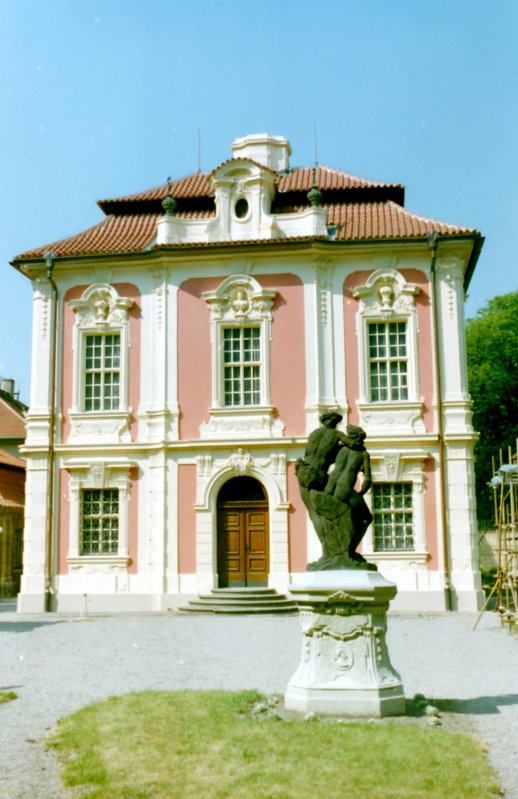
The Dvořák Museum, Prague
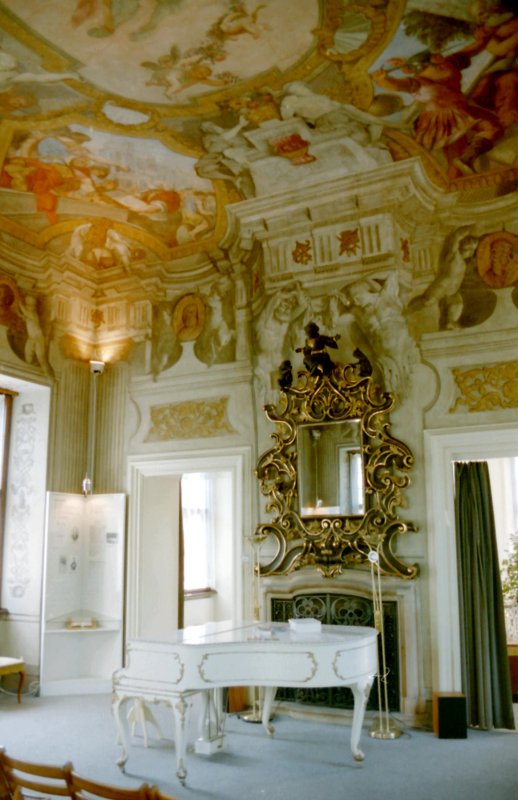
Interiors of The Dvořák Museum, Prague
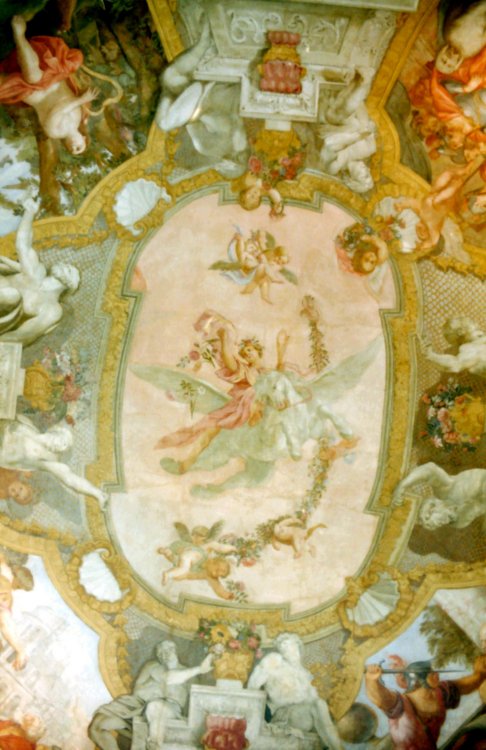
Elbaorate Ceilings in the Dvořák Museum, Prague
After that though, it was time for a pilgrimage.
My father was born in the town of Ústí nad Labem in Northern Bohemia, not far from the German border. In 1938 his family fled from their home to avoid the encroaching Nazi terror. After a few years of living in camps around Britain he settled in Guildford, then later after the death of his parents and his half-brother's emigration to New Zealand he went to live in London where he met my mother. The rest, as they say, is history.
Now, 62 years later, I was taking the train from Prague to Ústí to try and find the place where my father was born. The journey started off poorly, a large and very ugly old German - presumably travelling back to Dresden where the train was going - got on to my carriage with his wife and immediately began smelling the place out with BO. If this wasn't bad enough when the train began to move he had a sudden bout of travel sickness and began being sick on the floor. This was enough for me, I collected my bag and went to find another carriage.

The Bridge over the Labem (Elba) near Ústí nad Labem
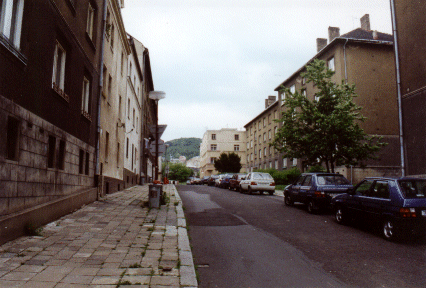
The Street in Ústí nad
Labem where Andrew's Father was born
The rest of the journey passed without much incident and I arrived in Ústí on a warm Saturday afternoon. Being Saturday, of course, everything was shut(!). The Museum, fortunately, was open and I went in to try and track down the street my father was born in, Siedlerstrasse. It turned out the nearest they could find was Zillerstrasse. So I headed for there, although it was now renamed Třebízského. It was on the other side of the River Labem (the Elbe), so I walked back through town past the old church of St. Mary which leans to one side because it was struck by lightning, and crossed the River. As I walked the weather began to deteriorate and I was started to expect a downpour. It never quite came and I arrived at Třebízského. It was a slightly squalid little street with Communist flats lining both sides, but it was the nearest I'm ever likely to come to finding where my father was born.
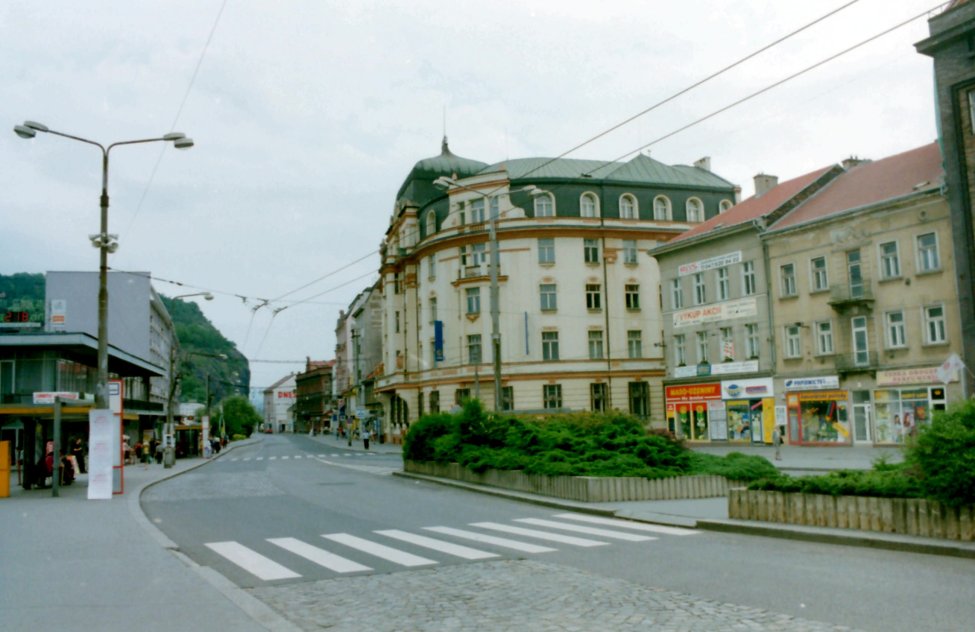
Ústí nad Labem City Centre
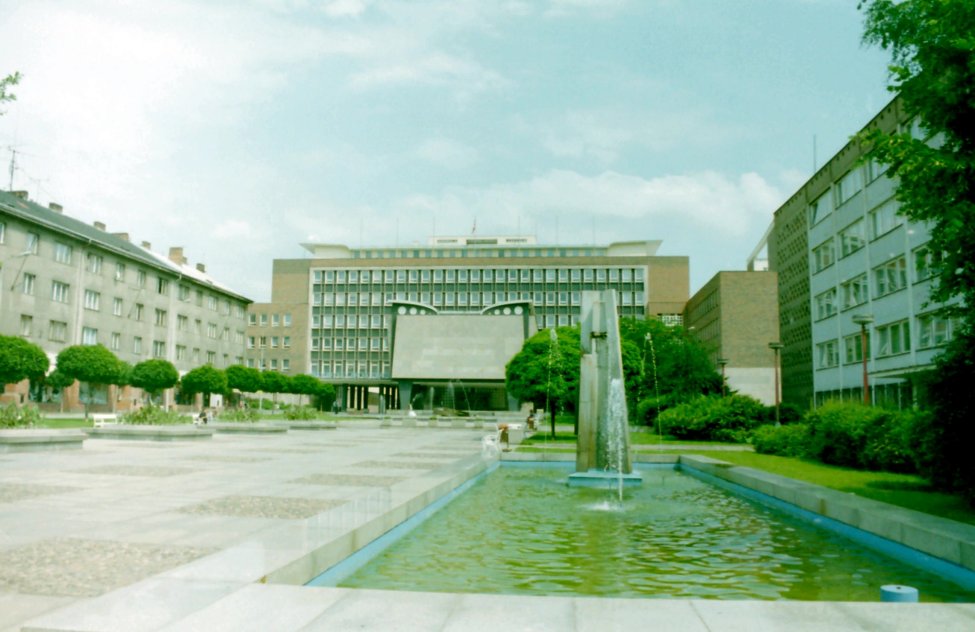
City Hall in Ústí nad Labem where the Few Remaining Records are held
His other chief memory of his life in Ústí was climbing up to the Shreckstein, a Castle near to the town. It is now called Střekov and is still a superb Castle, which apparently inspired Wagner's Tannhauser after he visited. A magnificent view of the Labem (Elba) valley can be had from the Castle's ramparts.
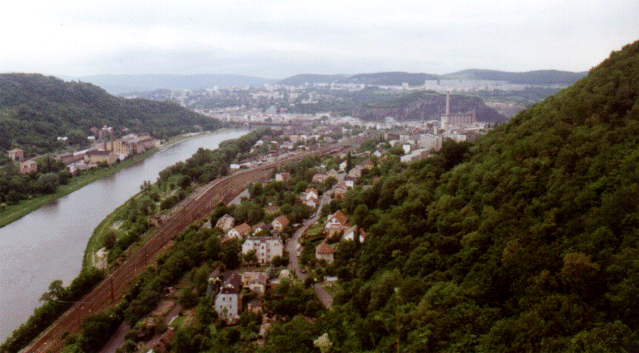
The View back towards
Ústí nad Labem from Strekov Castle
To see more about Střekov Castle, see our Castles of Europe pages.
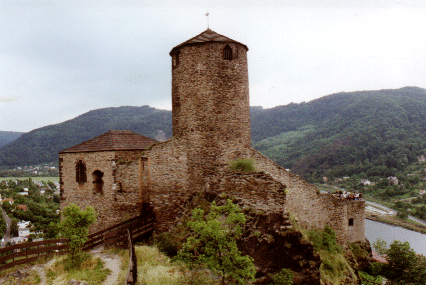
Strekov Castle, Ústí nad
Labem
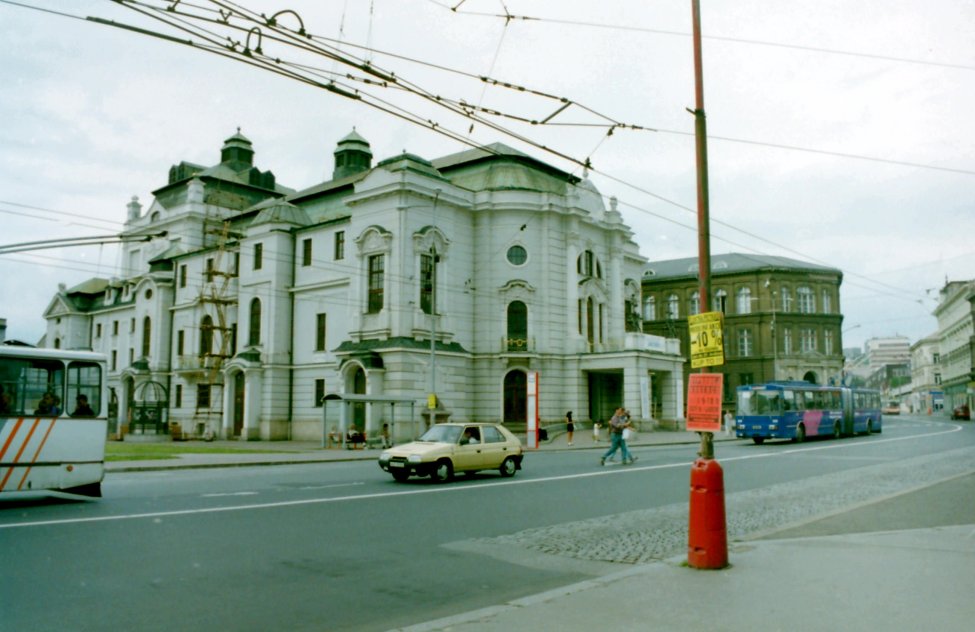
Back in Ústí nad Labem

Ústí nad Labem
There isn't a vast amount more to see and do in Ústí nad Labem, so I made my way back to the Station and waited for my train back to Prague (oddly enough here was the place where I encountered my first gypsy beggar). The only entertainment at the Station was watching one of the staff put up the new destination boards which was a simple task undertaken with an over elaborate amount of ceremony and procedure that the Russians would have been proud of!

Konopište Castle from its grounds
The following day would take me to two more Castles, on a guided coach tour. Having been picked up from my hotel and gone on a mystery tour picking up guests from other hotels we arrived at Republic Square in the centre of Prague where utter chaos ensued as people tried to find the correct coach. Eventually we set off for Konopištĕ Castle. This was a nice building, set in some lovely woodlands, but was less of a Castle and more of a hunting lodge. The bears in the moat were also rather medieval (in the worst sense of the word). A word of warning is that there are three separate tours if you want to visit all of the Castle, and you have to pay for each. We only had time for one as we had to head off for our meal and next Castle.
To see more about Konopištĕ Castle visit our Castles of Europe pages.

Karlstejn Castle
When we arrived back at the car park, inevitably, someone was late in arriving. Thirty minutes later they hadn't turned up still, so their other half (who had somehow managed to loose them) was left behind and we headed off. About a mile away on the main road we came across the lost person who we subsequently picked up and then went back to the car park where the guide had to go off and try to find the other half who we had left behind. Eventually about an hour after we were due to leave the coach pulled away with everyone aboard, most of whom were silently fuming because of the stupidity of certain people!
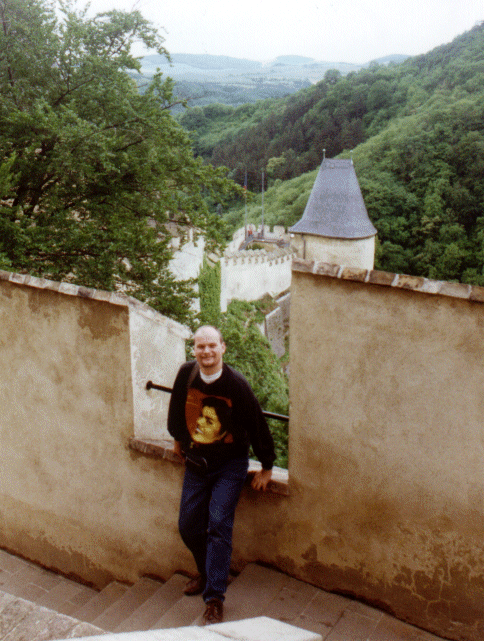
Andrew at Karlstejn
Castle

Towers in the Forest, Karlstejn Castle
Lunch was at a Mexican restaurant, of all things, on the outskirts of Prague. The coach headed into the City to dump the people who weren't going to the second Castle and eventually we arrived at Karlštejn Castle. This is a much more satisfying Castle to visit and one of the most important buildings in the Czech Republic, built by Charles IV to house the Bohemian Crown Jewels. The tour was interesting and enjoyable and the Castle is spectacularly situated on a crag above an attractive little village. After all the hassle leaving Konopištĕ it was a welcome relief.
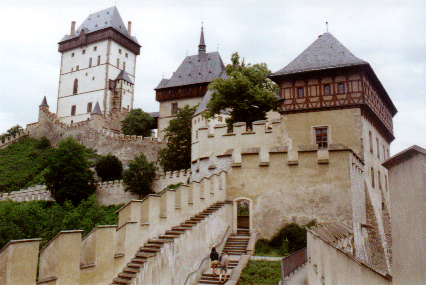
Karlstejn Castle
To see more about Karlštejn Castle, see our Castles of Europe pages.
With the tour over I arrived back in
Prague and had
what turned out to be
the only bad meal I had during my stay - a rather tasteless and dank
bowl
of pasta.
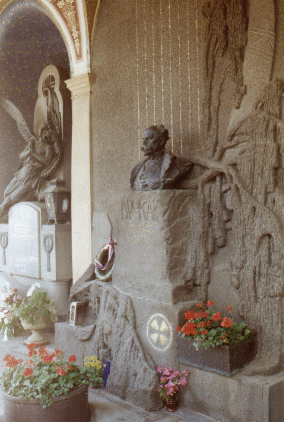
Dvorak's grave at
Vysehrad, Prague
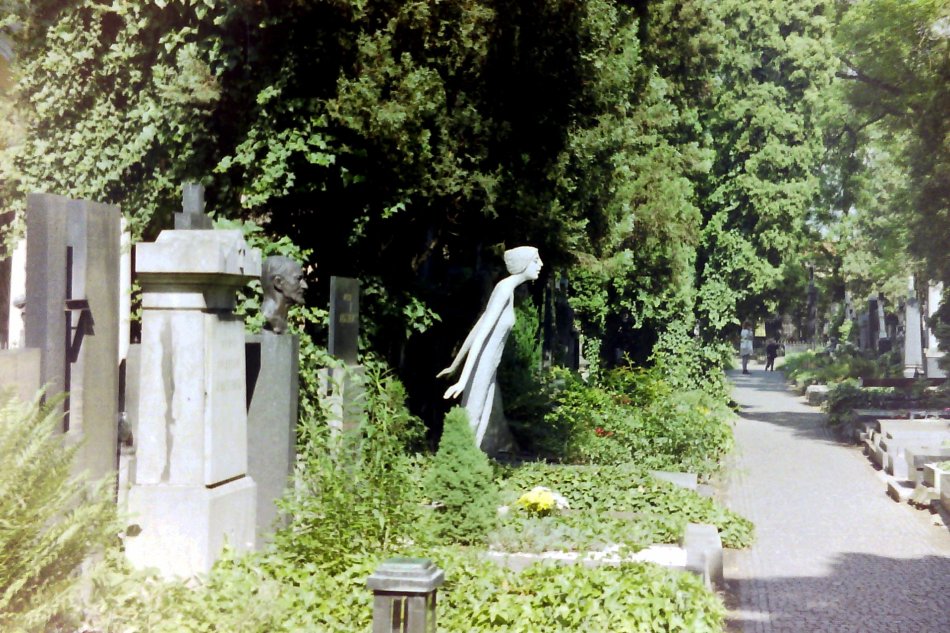
More Graves in Vysehrad, Prague
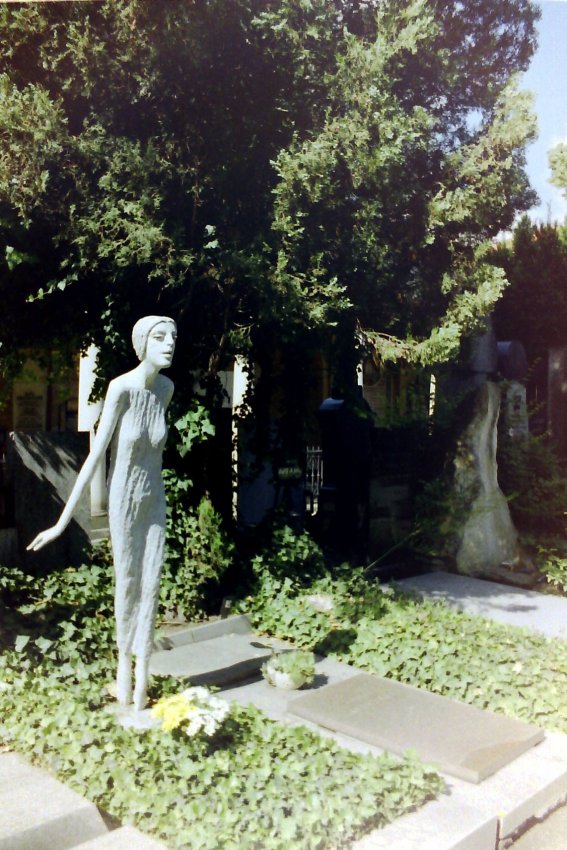
Another view of the White Lady Sculpture in the Vysehrad Graveyard, Prague
My last full day in Prague began at
Vyšehrad, a fortress
just outside
the Nové
M sto.
Vyšehrad is another
place which
plays an
important part in Czech mythology as it was here that the Princess
Libuse
allegedly prophesised that a great City would arise by the Vltava.
Originally
a true Castle (Vyšehrad means "Castle of the Heights") what
remains
today is chiefly a 17th century rebuild, but at it's centre is the
Church of St. Peter and St. Paul whose
churchyard is the burial place for the great and good of Prague -
graves
found here include Smetana and Dvořák.
sto.
Vyšehrad is another
place which
plays an
important part in Czech mythology as it was here that the Princess
Libuse
allegedly prophesised that a great City would arise by the Vltava.
Originally
a true Castle (Vyšehrad means "Castle of the Heights") what
remains
today is chiefly a 17th century rebuild, but at it's centre is the
Church of St. Peter and St. Paul whose
churchyard is the burial place for the great and good of Prague -
graves
found here include Smetana and Dvořák.
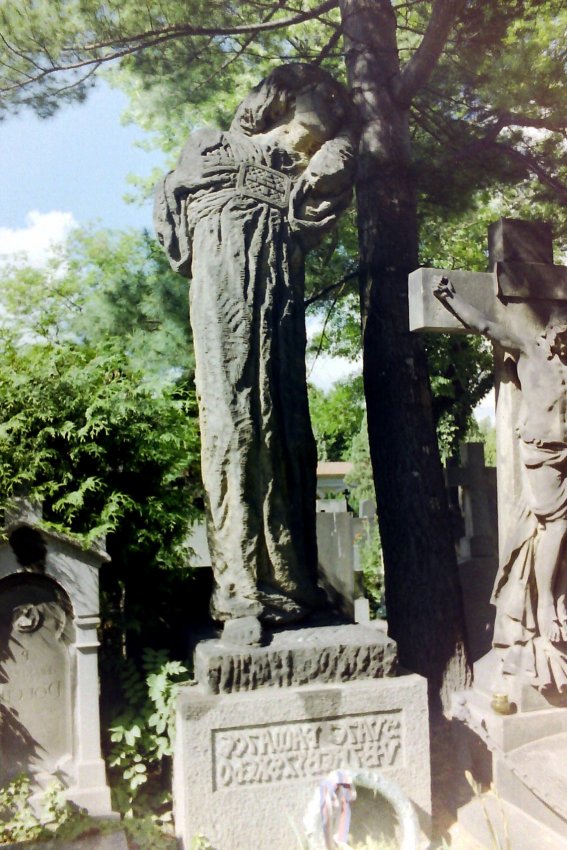
Another dramatic Vysehrad Monument, Prague
For more about the history of Vyšehrad, see our Castles of Europe pages.
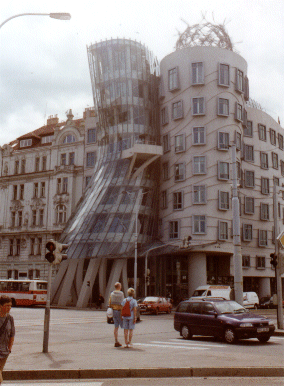
he "Fred and Ginger"
Building in Prague
I decided to walk back to the City Centre from Vyšehrad, thus passing the amazing "Fred and Ginger" building, a modern addition to Prague's wonderous collection of architecture.
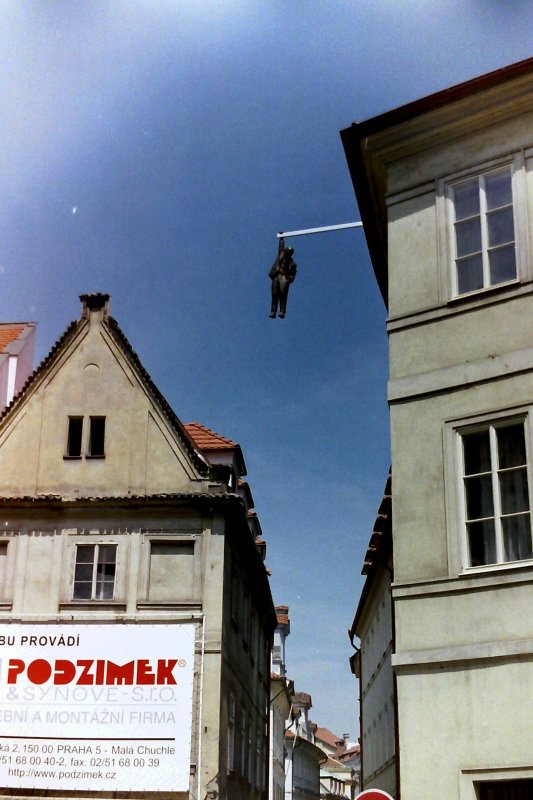
Man Hanging Out sculpture in Prague
Back in the Old Town I decided to chill out before I tackled the seriousness of the Jewish Quarter (or Josefov), so I bummed around the shops selling beautiful Bohemian Crystal and Russian Petrushka dolls and had an ice-cream of some magnificence.
Thus fortified I headed to the Pinkas Synagogue which begins your tour of the remains of Jewish Prague - once a city within the city, now a mere shadow of itself thanks to the efforts of the Third Reich. The interior of the Pinkas Synagogue has walls covered with the names of all the victims of the Holocaust from Czechoslovakia (as it was then). To be allowed into this, and the other, Synagogue's men need to wear a skull cap (which in a typically Czech version of free enterprise you have to pay for!).
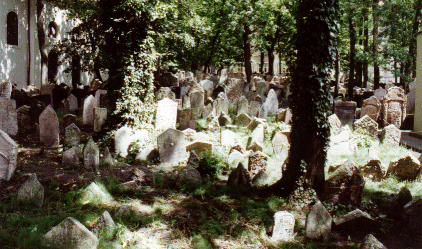
The Old Jewish Cemetery,
Josefov, Prague
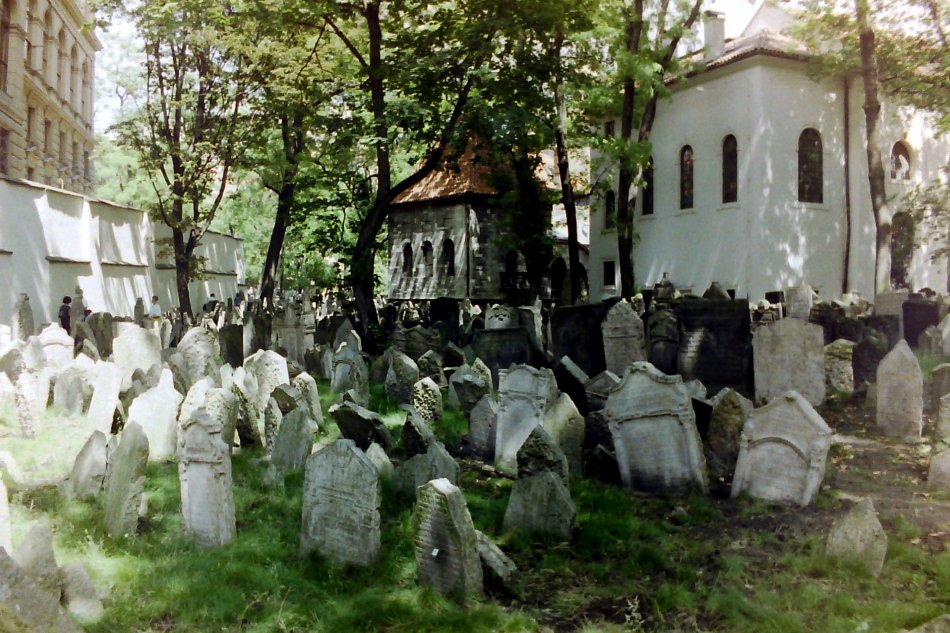
Another view of the Old Jewish Cemetery, Prague
The highlight of a trip around the Jewish Quarter is the famous Old Jewish Cemetery, with its jumbled mass of graves, some of which are very ancient - include that of Rabbi Löw, the famed creator of the Golem of legend. The oldest Synagogue is the Old/New Synagogue dating back to the 14th century. The entrance passageway has little windows blocked up with wood through which the women could hear the ceremony going on within - they were only allowed inside the Synagogue proper once; on the occasion of their marriage.

The Old Jewish Cemetery, Josefov, Prague
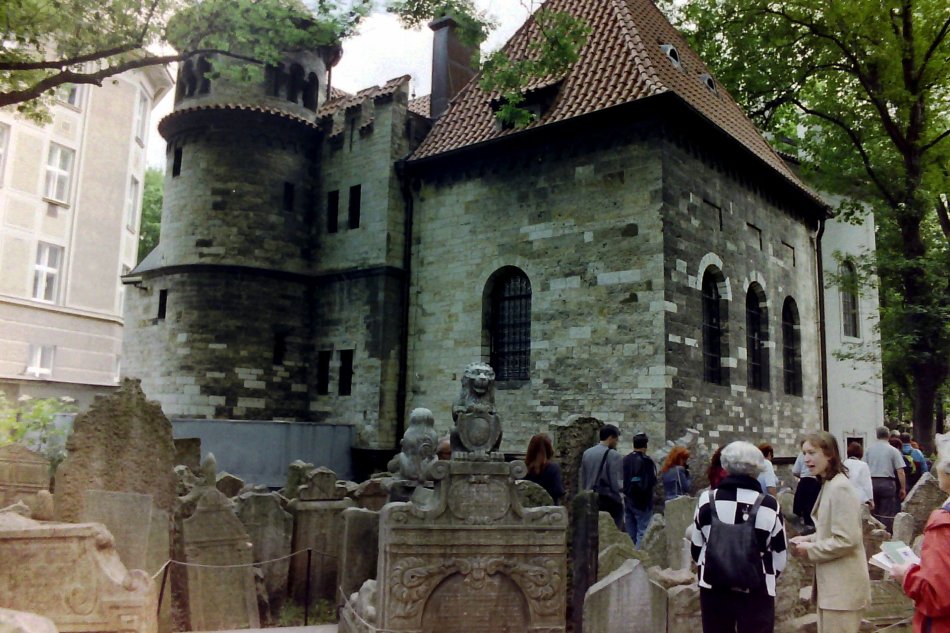
Touring the Old Jewish Cemetery, Prague
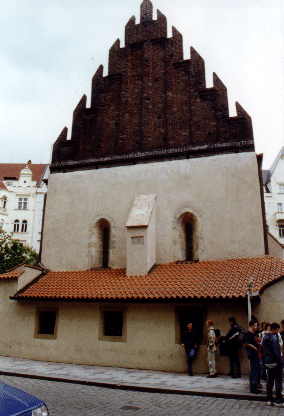
The Old/New Synagogue,
Prague
Between visiting the Old/New Synagogue and the Spanish Synagogue the weather finally took a turn for the worse and rain hammered down from the sky. I took shelter in the Franz Kafka Café...in the Jewish Quarter, Kafka is BIG business!

Art Noueveau Café Front
in the Nove Mesto, Prague
The interior of the Spanish Synagogue is magnificent - but unfortunatly you aren't allowed to take photos (for no apparent reason as usual). It is kitted out as a museum and was full of Americans saying "gee how terrible the Holocaust was".
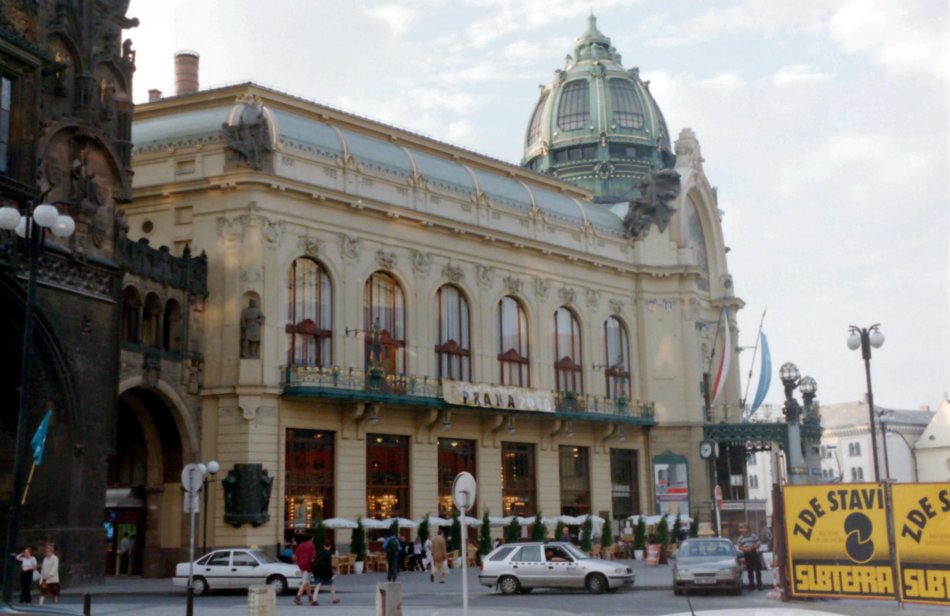
More Art Nouveau - The "Municipal House" in Prague
A few figures. In 1938 there were 118,310 jews in Bohemia and Moravia. 7,002 were deported directly to the death camps from Prague of which 291 came back. A total of 80,000 approximately from Bohemia and Moravia were murdered. It's hard to comprehend, but the solemn atmosphere in the Old Jewish Quarter of Prague does it's best to keep the memory alive.
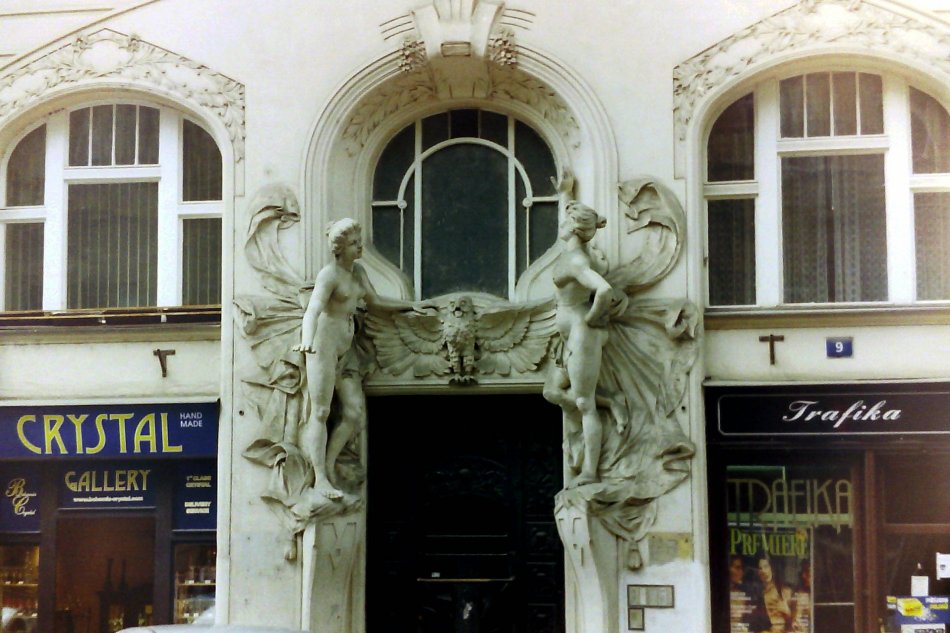
More Art Nouveau Elegance, Prague
After this I needed another break so I went wandering up to the massive Metronome sculpture which stands in Letenské Sady, a municipal park across the Vltava from Josefov. This was where the largest statue in Europe used to stand - a massive one of Joseph Stalin which was taken down even before Communism fell (in 1962 to be precise). The working Metronome, came only recently and is quite remarkable in it's own way - although I can't help feeling the statue of Stalin would have been pretty damned impressive too. Either way the view from the plinth, which is all that remains of the statue, is superb looking back towards the City.
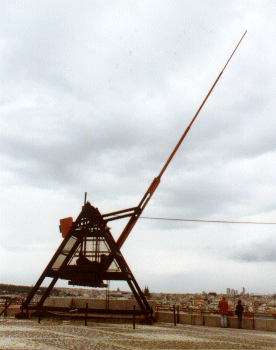
The Metronome 'Statue'
in Prague
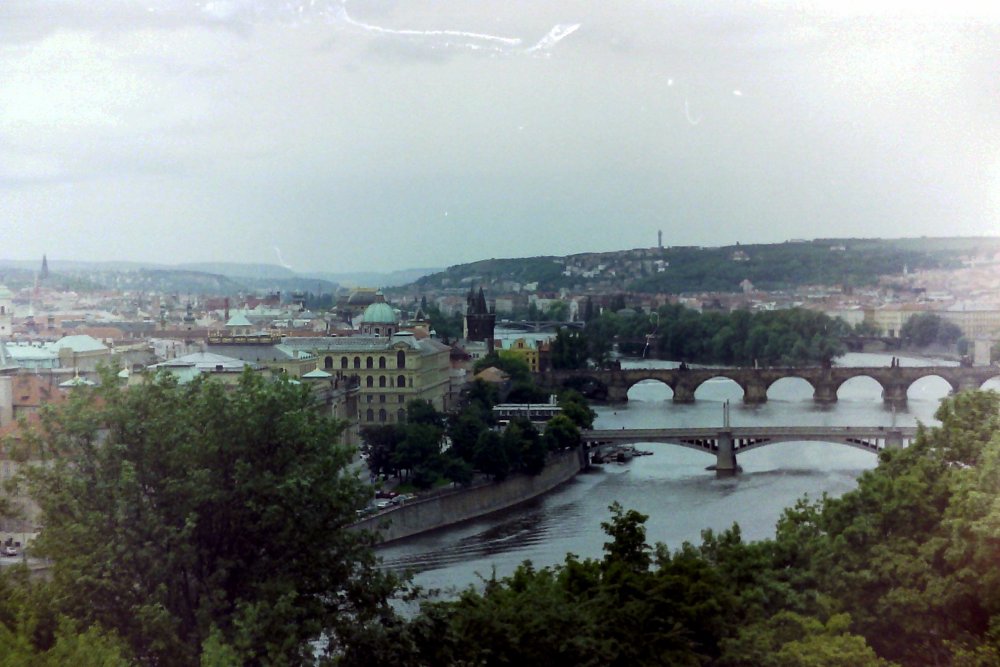
View of the Vltava from Letenské Sady, Prague
That evening I had a truly magnificent vegetarian meal in the Lotos Restaurant - a recommendation for everyone, veggies or not, and took in one of the Concerts which are hawked on the streets. This was Eine Kleine Nachtmusik and The Four Seasons performed brilliantly by a five piece chamber orchestra and only Ł6 for the privilege!
The following day I was on the move - but not to Poland as originally planned - but rather to Bratislava in Slovakia and from there to Vienna.
******************
After my visits to Vienna and Slovakia I retraced my steps and arrived back in Prague with an afternoon to spare.
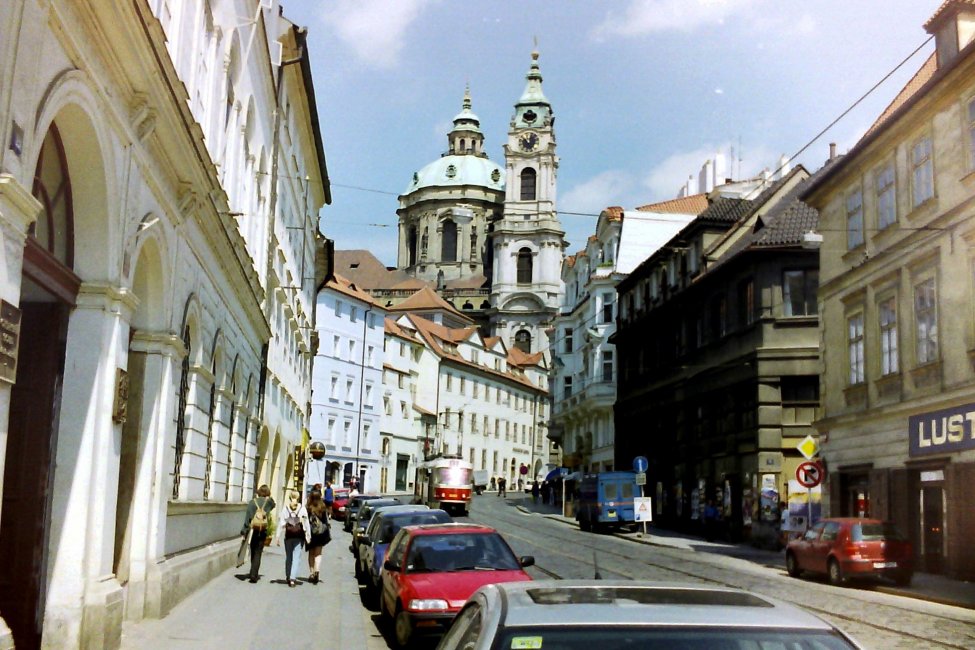
St. Nicholas' Church, Malá Strana, Prague
I was determined to stay a bit closer to the centre of town this time, and booked into the rather more expensive (Ł60 per night) Hotel Kampa on Kampa Island in the Malá Strana. It's the only place I've had thus far stayed with a suit of armour in reception! On the pillow in my room awaited a little chocolate with a note saying "Have a good and sweet nihgt".
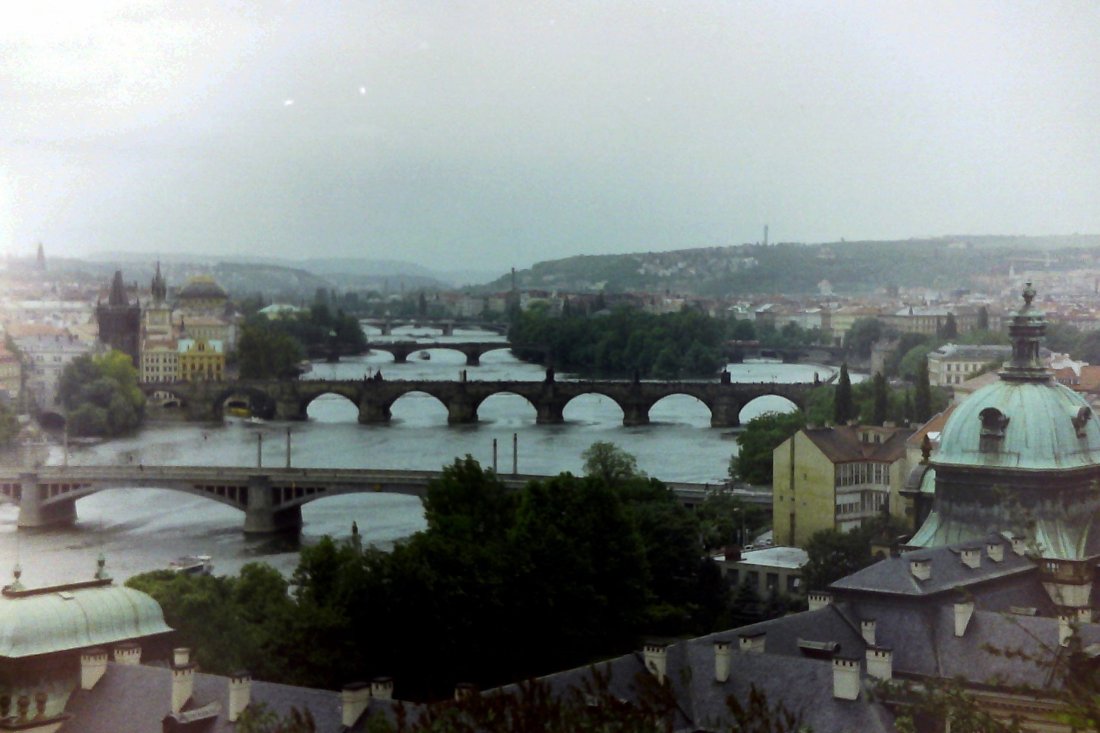
View up the Vltava
River, Prague
I had left one of the must-do's of Prague for this day. A trip to the top of the Tower on the Old Town Hall. I was glad I did because it gave me the best view of the many great views of this wonderful City. I was amazed to see that the top of the Tower was accessible in a wheelchair, which is pretty impressive in itself. Another concert, this time mostly Dvořák and Smetana (including, of course, Vltava) played by a six piece wind ensemble. Again only about Ł6, and again brilliant.

The Týn Church seen from
the Old Town Hall Tower, Prague
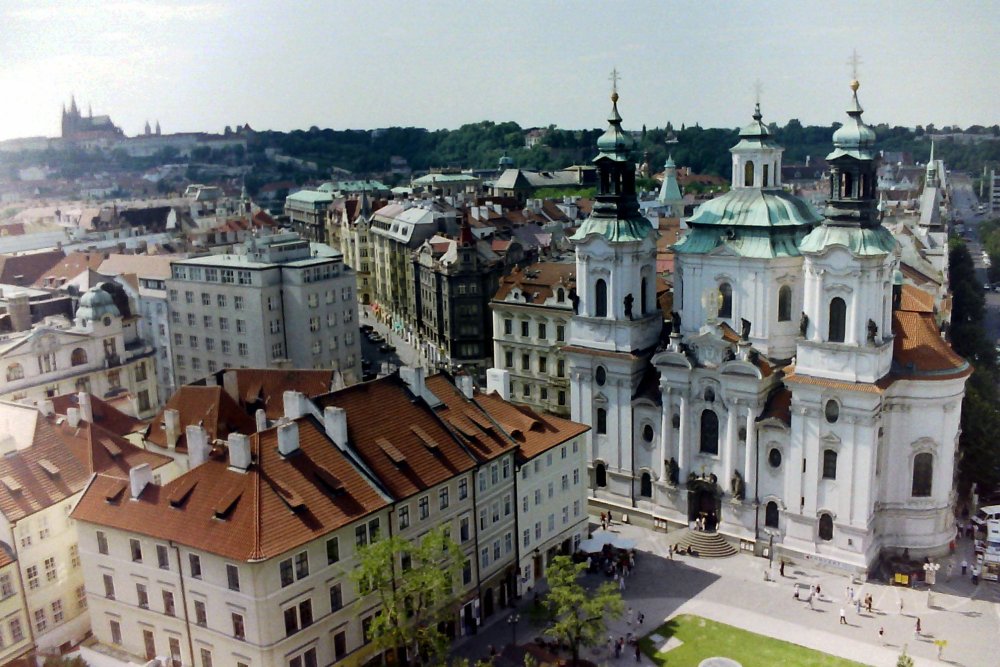
St. Nicholas' Church and Old Town Square from Old Town Hall Tower, Prague
As night fell this last day I wandered around the Staré Mĕsto for the last time and began to wish I could stay longer. Prague really is one of the most beautiful and alive cities in the World and I'd urge anyone and everyone to visit soon.

The Malá Strana Tower at
the end of the Charles Bridge on my Last Evening in Prague
The following morning I had a magnificent breakfast in a fake medieval banqueting hall in the cellar of the hotel with a real live pianist. The spread was just amazing. After my third cup of strong coffee the pianist started playing "The Sting" and I knew it was time to leave Prague behind me.
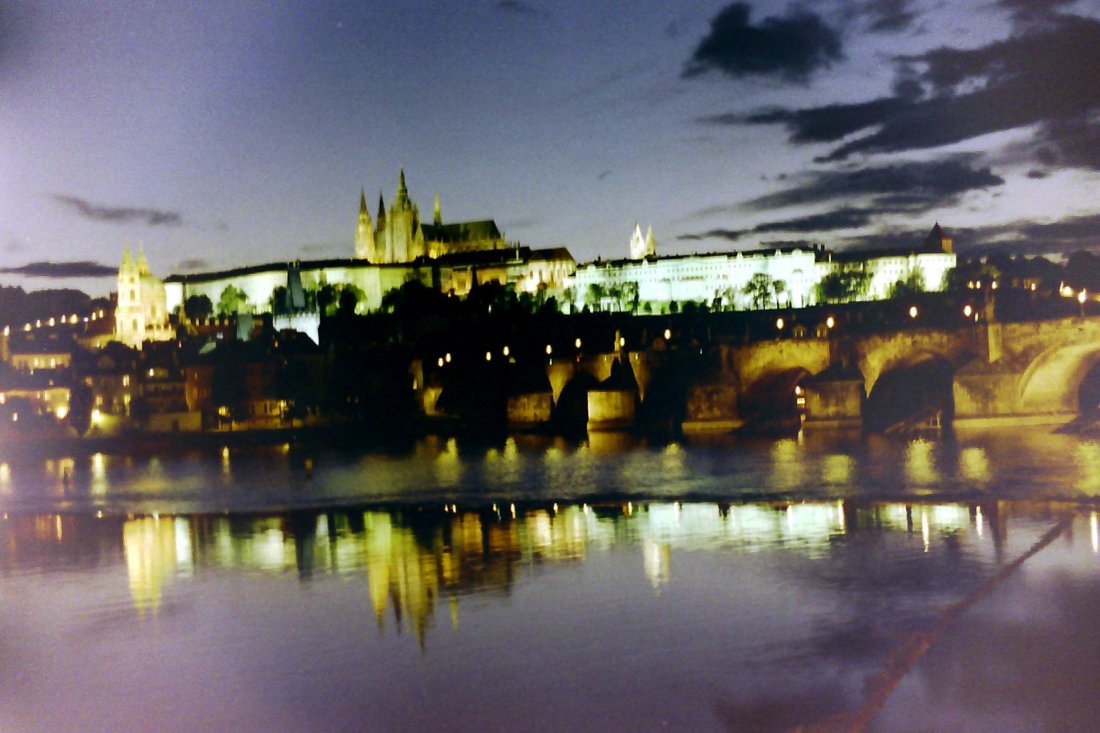
The Sun Goes Down over Prague


© Text copyright - Raving Loony
Productions and
Andrew J. Müller
© Photos and Artwork - Andrew J. Müller
© Web Design and Layout - Andrew J. Müller
2026


